
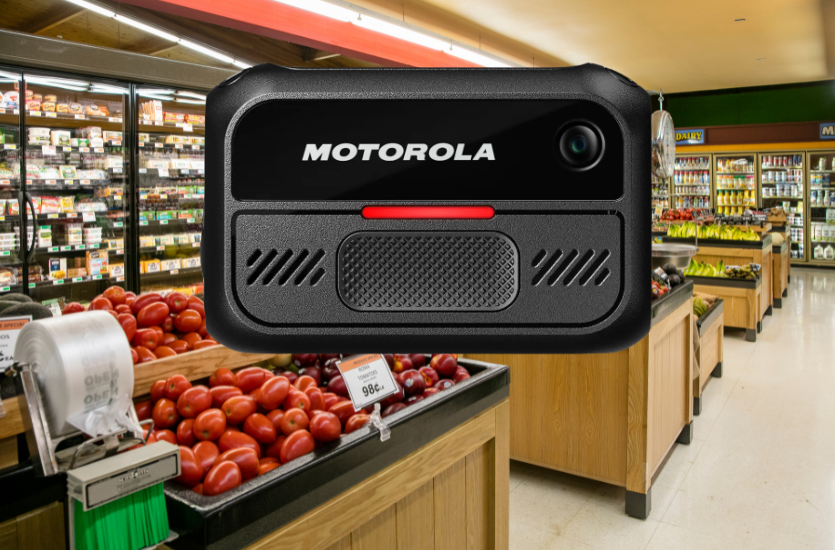
When you think about body-worn cameras (BWCs), what comes to mind? If you are like most people, you probably think of a police officer on patrol. But these devices are making their way into a new setting. Think of places like your favorite retailers, customer service counters, delivery routes, and even warehouses. Why? Because it’s the very same technology that helps keep public spaces safer, can also protect employees, settle disputes, and create a record when things don’t go as planned.
Whether you are part of a store security team addressing theft or a delivery driver trying to get a package to its destination, unpredictable situations arise. And when they do, retail body-worn cameras can be an integral part of the conversation. We think that’s a good thing. That’s why we’re taking the time with this article to give you insights into how some of your favorite businesses are using body-worn cameras, what benefits they bring, and the guidelines every company should keep in mind before rolling them out.
Why Retail and Customer Service Environments Need BWCs
Customer-facing jobs have always come with challenges, but today’s retail and service environments often ask employees to handle more than stocking shelves or answering questions. From shoplifting incidents to heated customer disputes, frontline staff are often placed in difficult situations with little backup. That’s where retail body-worn cameras can be super useful. They provide a layer of accountability that benefits both employees and customers, helping businesses create a safer and more transparent environment.
These devices are about so much more than security. They’re about documenting interactions in a way that clarifies “he said, she said” moments and provides managers with the information they need to make fair decisions. Consider how they can help:
- Deter theft or aggressive behavior when cameras are visible
- Provide clear documentation if a situation escalates
- Protect staff from false accusations by recording the full context
- Support training by offering real-life examples of interactions
For retail managers, delivery companies, and customer service teams, BWCs are becoming less of an experiment. More and more retailers are putting this technology into practice. And no, it’s not because BWCs can replace people. Quite the contrary. These devices can add an important layer of protection in environments where every interaction counts.
Benefits of Retail Body-Worn Cameras
Retail shrink is the difference between recorded inventory and the amount that actually reaches the register. And it’s become a growing concern for retailers across the U.S. According to the National Retail Federation’s 2024 report, retail shrinkage has reached $112.1 billion in annual losses. Let’s translate that for you. That means an $18 billion increase year-over-year. The problem has become so severe that the NRF stopped publishing its annual shrink report, citing the sensitivity of the data. The key point is that it isn’t just about merchandise disappearing; it reflects the financial strain that theft and fraud place on businesses of every size.
Retail crime is evolving. And not just in scope. It’s getting more sophisticated, too, which means prevention strategies need to adapt. Don’t believe us? Consider that 34% of retailers have indicated that they are increasing internal payroll just to address risk. And 46% are leaning more heavily on third-party security personnel.
But that’s not all. Technology is also becoming more of a central focus. More than half of retailers are increasing their budgets to implement software and hardware solutions to reduce crime. Those numbers tell quite the story.
And you’ll never guess what retailers are building into their toolkits. Okay, you guessed it: retail body-worn cameras. Why? These tools not only increase accountability but also deter.
Consider these benefits and how they can help with not only loss prevention but also customer service and staff protection.
- Visible body-worn cameras discourage theft and aggressive behavior
- These devices offer pretty significant clarity on incidents for investigations and claims
- They help protect staff from false accusations during disputes
- BWCs provide the opportunity to review real interactions, resulting in training opportunities that can really pay off
- They support compliance and transparency efforts within the business
We’d be remiss to suggest that BWCs are a silver bullet. But the truth is that they’re becoming an increasingly important part of how businesses can respond to these ever-changing challenges.
Industry-Specific Use Cases
Body-worn cameras are no longer limited to law enforcement. They’re finding a place in everyday business settings where staff interact directly with the public, and the benefits differ depending on the industry.
Retail and Loss Prevention
Theft and customer disputes are ongoing challenges in retail. Having retail body-worn cameras in play discourages theft and provides clear evidence when an incident occurs. Managers gain reliable documentation that supports investigations and helps avoid drawn-out arguments over what really happened.
Customer Service and Hospitality
When you go out to eat, stay in your favorite hotel, or simply head to a service counter for assistance or a recommendation, you hope that everything will go smoothly. But that’s not always the case.
These locations are prime for conflicts that can quickly flare, sometimes getting out of control. When cameras are visible, it can help de-escalate situations. Why? Because no one wants to be recorded, and they certainly don’t want to find evidence that they are in the wrong. These recordings, however, can do so much more than keep things under control. They offer excellent opportunities for staff training, showing employees just how to handle tense conversations professionally.
Delivery and Field Services
Accidents happen. And though we hate to admit it, sometimes things happen due to malicious intent. These situations can result in property damage, and even worse, in personal safety concerns. When drivers wear body-worn cameras, it helps provide protection and documents what is actually happening.
This can make it so much easier to dispute issues fairly. And that can give everyone some added peace of mind.
Private Security
Security personnel in malls, stadiums, or entertainment venues often manage large crowds. And we all know that violence at concerts has been making the news in recent years. There’s just something about a lot of people in crowded spaces that results in tensions flaring.
But when security officers wear cameras, it provides a reliable and irrefutable record of these events. This can be super helpful when these issues escalate into legal matters. These records can also help shape future safety strategies. That means safer events for everyone involved.
The point is simple. When accountability is proven and maintained, it deters theft. There are fewer disputes. And, training becomes so much easier. So, if you’re in the mode of investing in better-trained staff and technology, it might be time to add BWCs to the mix.
Guidelines for Responsible BWC Use
All said, responsibility needs to be at the core of BWC usage. Yes, the devices are useful in and of themselves, but there are some basic principles to employ for anyone donning a camera. Remember, your employees and customers deserve transparency. Not only is it ethical, but it is expected. Just like you likely value your own privacy, so do others.
With that in mind, let’s consider the following guidelines on how to incorporate cameras in commercial business environments.
- Let employees know that they are being recorded. Surprises like this aren’t appreciated by anyone.
- Don’t, under any circumstances, record in private spaces. Restrooms and breakrooms should be private.
- Only allow authorized personnel to review footage.
- Be sure to follow industry and legal standards for data storage.
- Focus on recording incidents or specific situations. Not everything needs to be caught on film.
- Draft and institute a written policy that explains how and when footage can be used. And follow it.
Following the tips we outlined above will absolutely pay off in the long run. They’ll help to create a safer environment without compromising individual rights. Today’s employees and consumers expect transparency, and transparency builds trust. When you’re open and honest, you’ll have a higher acceptance rate, and your people will feel better about wearing cameras.
Remember, surveillance for the sake of surveillance is never a best practice. BWCs are all about transparency and providing reliable documentation when it’s needed.
Balancing BWC Security with Privacy
We’ve already talked quite a bit about accountability, so forgive us for going down a potential rabbit hole. We want to address a pretty important question: how do you increase accountability without making employees or customers feel like they’re under constant watch? It’s a great question, and the answer is all in finding the right balance between meeting your security goals and respecting the privacy of everyone who enters your establishment.
It is possible to take a thoughtful approach when putting boundaries in place. Recording should never happen in private areas such as bathrooms, locker rooms, or employee lounges. Clear signage and direct communication also help customers understand when and why cameras are being used.
Some of our clients also use redaction software. This technology can blur faces or mute audio when footage is shared outside the immediate team. This creates a bit more privacy, especially when you are using video footage for training purposes. Why risk unnecessary exposure when you don’t need to?
Ultimately, body-worn cameras should feel like a fair safeguard rather than an invasion. When businesses set clear rules and respect personal boundaries, the technology becomes a helpful tool that protects people on both sides of the interaction.
Technical Considerations for Businesses
So, what happens after you purchase the devices? Business owners and security teams will need to think through the technical details that affect everyday use. The right setup can help your team members rely on the technology without being distracted by it.
Here are some of the most important factors that you’ll want to keep in mind.
- Battery life that covers a full shift, so staff aren’t left without coverage mid-day.
- Get devices that are simple to operate so employees can use the devices quickly in fast-paced environments.
- Create storage options that fit the business. In our experience, we see that businesses that need scalability go for cloud-based solutions. Those who want more direct control opt for on-premise storage.
- Enable integration with your existing technology, including dispatch software, radios, or reporting tools, to create flawless workflows.
- Consider size and comfort. You’ll want your team to be able to wear the devices for hours on end. Don’t sacrifice their movement or ability to do their tasks.
When you take all of these considerations into account as part of the plan (and not as an afterthought), the technology becomes more practical. It also helps prevent issues such as lost footage, employee frustration, and gaps in data security.
Training and Implementation Best Practices
Your team members deserve to understand how BWCs fit into their workday. For that reason, keep training practical. Don’t turn it into a compliance lecture. Make it your goal to help staff feel comfortable using the cameras as a support tool rather than something to worry about.
Start with clear expectations around when cameras should be turned on and when they should stay off. Walking through realistic scenarios, like tense customer interactions or delivery disputes, helps employees picture how the camera fits into the moment. It also helps remove hesitation during stressful situations.
A simple training plan might include:
- When recording should begin and end
- How to wear and operate the device during a shift
- What happens to footage after it’s recorded
- Who can access recordings and for what reasons
- How cameras support safety, fairness, and learning
Customer communication is part of the rollout, too. Clear signage and easy-to-understand explanations go a long way toward avoiding confusion.
Managers can reinforce expectations by reviewing select clips during team meetings. Think about that for a moment. Haven’t you ever attended a team meeting where the boss played some corporate video that felt more illustrative than real? Well, real examples are going to land better than those corporate videos or even written instructions.
Lastly, check in regularly with staff to see what’s working and what needs adjustment. Small tweaks early can make a big difference over time.
The Future of Retail Body-Worn Cameras
So, what’s next for retail body-worn cameras? What can we say other than that it is evolving? And it should come as no surprise that artificial intelligence (AI) is at the forefront. Retailers and service providers are taking a look at how AI can assist with reviewing footage, identifying patterns of theft, or flagging aggressive behavior before it escalates. Pretty cool, huh?
Wearable technology is also becoming more versatile. Devices like the Motorola VT100 Body-Worn Camera are designed for customer-facing roles, offering lightweight wearability and simple controls that work well in retail settings. But what about those who spend long hours on the move, whether it’s walking the aisles of a retail store or driving long miles for deliveries? In this case, the Motorola V200 Body-Worn Camera is a great choice because it provides extended recording capacity and reliable performance across shifts. For security teams managing larger venues, the Motorola VB400 Body-Worn Camera has gained traction in public safety for its robust features and its ability to operate in complex environments.
Future integration with radios, dispatch platforms, and even smart glasses may further expand how businesses use these tools. But as we have said before, as this technology evolves, keep the focus on accountability and practicality. This will help keep you, your team, and your customer protected as you adapt to new challenges.
EMCI Wireless is Your Partner for Retail Body-Worn Cameras
Yes, we see a lot of evidence from body-worn cameras in the news these days. But body-worn cameras aren’t just for law enforcement anymore. Today, they’re used in many places we never would have expected to need just a few years ago. We’re talking retail stores, customer service environments, delivery routes, and event security. The goal? To reduce theft and violence and to help clear up disputes when they arise.
They’re also proving super helpful as learning tools, giving teams real examples to learn from. While new features and technologies will continue to emerge, the real value lies in using cameras thoughtfully, setting clear boundaries, and maintaining policies that respect both employees and customers.Are you looking to add BWCs to your security protocol? If so, we’re here to help. We can help businesses in southern and central Florida choose the right camera solutions for their unique needs. We offer the technology solutions and support that keep both staff and customers protected. Contact us today to learn more.