
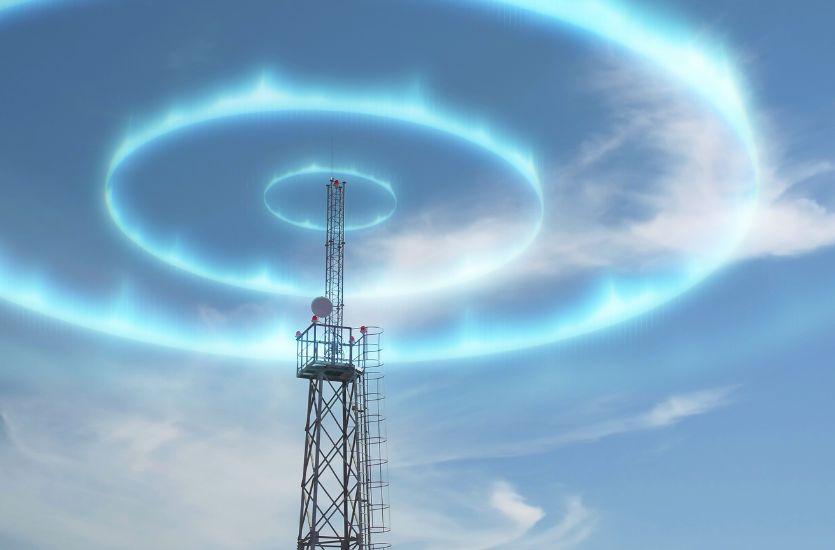
Two-way radios rely on radio signals traveling through space to connect people across distances. While many users focus on the radio itself, antenna placement often plays a much larger role in how well communication works. A common belief is that a stronger radio or higher wattage automatically means better range, but that is rarely the case.
Factors such as mounting height, antenna orientation, and nearby obstacles all shape how signals move. Understanding these elements sets realistic expectations for coverage and helps explain why placement choices matter so much. In this article, the team at EMCI Wireless will provide the insights that you want to know.
How Radio Signals Travel
Radio propagation describes how radio waves move from a transmitting antenna to a receiving radio. These waves do not travel through empty space alone; they interact with the air, terrain, buildings, and even layers of the atmosphere as they move around the Earth.
In many two-way radio systems, communication works best when there is a clear line of sight between antennas. When that path is blocked, signals may bend around objects through diffraction or bounce off surfaces through reflection. While these behaviors can sometimes extend reach, they often introduce distortion or signal loss.
This is why distance by itself does not define coverage quality. A short path filled with obstacles can perform worse than a longer path with fewer barriers. Understanding how signals behave helps explain why thoughtful antenna placement for radios has such a strong influence on communication reliability.
The Role of Height in Signal Coverage
Antenna height has a direct impact on how far a radio signal can travel and how clearly it is received. Higher placement generally reduces the number of obstacles a signal must pass through, which can improve consistency across a coverage area. How height is applied, however, depends largely on whether the antenna is part of a mobile system or a fixed installation.
- Mobile antennas: Mounted on vehicles, these antennas are limited by roof height and nearby traffic, buildings, or terrain, which can shorten range and introduce interference.
- Base station antennas: Installed on towers or rooftops, these antennas benefit from greater elevation, allowing signals to travel farther with fewer interruptions.
Height considerations vary by environment. In urban areas, taller placement helps signals clear dense buildings. Suburban settings balance elevation with zoning limits. Rural systems often rely on height to overcome long distances and uneven terrain. In each case, thoughtful antenna placement for radios can mean the difference between spotty communication and reliable coverage across the intended area.
Antenna Orientation and Polarization
Antenna polarization refers to the direction in which radio waves are transmitted, most commonly vertical or horizontal. In two-way radio systems, vertical polarization is far more common because it works well for mobile and handheld use. Problems arise when antennas with different polarizations attempt to communicate, as mismatched orientation can lead to signal loss and reduced clarity.
Matching antenna orientation across devices is important because radios transmit and receive signals most efficiently when polarization aligns. Handheld radios are typically designed for vertical use, with antennas pointing straight up. Mobile antennas mounted on vehicles also use vertical orientation to match handheld units. Fixed-mount antennas may be installed vertically or horizontally, depending on the system design, but they must align with the radios they support.
Common orientation mistakes can quietly reduce system performance, even when equipment appears properly installed. Small alignment issues often lead to weak reception, dropped transmissions, or uneven coverage across users. Some of the most frequent problems include:
- Tilting handheld antennas while talking, which changes polarization and weakens the signal
- Mounting vehicle antennas at an angle, often due to rack or body panel limitations
- Mixing vertical and horizontal orientations within the same radio system
- Improperly positioning fixed antennas during installation or maintenance
What Gets in the Way of a Strong Two-Way Radio Signal
A strong two-way radio signal depends heavily on what surrounds the antenna. Higher ground and an unobstructed view allow radio waves to travel farther with fewer interruptions. Installing an antenna five to ten feet above the roofline often helps clear nearby obstacles and reduces interference caused by the structure itself. Placement near certain materials also matters. Metal can reflect or absorb signals, concrete can weaken them, and glass or water can alter how waves pass through an area.
Physical obstacles are one of the most common challenges. Buildings, hills, vehicles, and even dense foliage can block or scatter signals. Trees filled with leaves may reduce coverage more in summer than in winter, and moving vehicles can create momentary signal drops. Weather plays a role as well. Heavy rain, snow, or temperature changes can slightly affect signal behavior.
Even when the air looks clear, radio waves may still be bending, reflecting, or losing strength due to unseen surfaces and environmental conditions along their path.
Ground Planes and Mounting Surfaces
A ground plane plays an important role in how an antenna transmits and receives radio signals. It acts as a reflective surface that helps shape the signal pattern and supports stable performance. In many mobile and fixed installations, the mounting surface becomes part of the antenna system itself, which is why location and material matter so much. Poor mounting choices can lead to uneven coverage or signal loss, even when the antenna appears correctly installed.
Here are some common ground plane and mounting considerations:
- Vehicle roofs, which often provide a broad, metal surface that supports consistent signal patterns
- Building rooftops or towers, where height and surface material influence performance
- Non-metal surfaces, which may require added grounding components to function properly
- Mounting position, such as centered versus edge placement, which affects signal balance
Ignoring these factors can limit coverage and create communication gaps. Thoughtful antenna placement for radios takes ground planes and mounting surfaces into account from the start, helping systems perform as intended across their service area.

Understanding the Antenna System as a Whole
A two-way radio antenna does not work on its own. It is part of a complete system that includes the radio, feed lines, connectors, and mounting hardware. Each component affects how well signals move from the radio to the antenna and out into the environment. Even a well-placed antenna can suffer performance loss if other parts of the system are overlooked.
Feed lines, often called coaxial cables, carry the signal between the radio and the antenna. Longer cable runs can introduce signal loss, especially if lower-quality cable is used. Connectors also matter, as loose or poorly installed connections can reduce signal strength or introduce noise. Impedance matching is another factor. When system components are not matched correctly, some of the signal reflects back toward the radio instead of being transmitted.
Because of these interactions, antenna placement for radios cannot be evaluated in isolation. Height, orientation, and location must be considered alongside cable quality, connector integrity, and overall system design to achieve consistent communication results.
Matching Antenna Type to the Application
Selecting the right antenna starts with understanding how and where a radio system will be used. Different environments and communication goals call for different antenna designs, and choosing the wrong type can limit coverage or create unwanted gaps. Antennas are built to direct signals in specific patterns, making it important to match the antenna to the intended application rather than relying on a one-size approach.
Common antenna types and use cases include:
- Omnidirectional antennas, which send signals evenly in all directions and work well for wide-area coverage
- Directional antennas, which focus energy in a specific direction for longer reach or targeted communication
- Indoor antennas, designed for shorter ranges and controlled environments
- Outdoor antennas, built to handle exposure while supporting broader coverage needs
Fixed-site systems often prioritize reach and consistency, while mobile operations need flexibility as users move through changing environments. In both cases, antenna placement for radios plays a supporting role, working alongside antenna type to shape coverage, reliability, and overall system performance.
Testing, Tuning, and Adjusting Placement
Even with careful planning, antenna placement often benefits from testing and adjustment after installation. Real-world conditions can differ from expectations, making on-site evaluation an important step. Signal testing helps identify weak spots, interference, or coverage gaps that may not be obvious during setup.
Technicians commonly use field strength measurements or test radios to check clarity at different distances and locations. Small changes, such as raising the antenna a few feet or adjusting its angle, can lead to noticeable improvements. In some cases, rerouting a cable or moving the antenna away from nearby structures reduces interference.
Tuning may also involve adjusting system components to better match operating frequencies. When coverage needs are complex or reliability is especially important, professional site surveys provide valuable insight. This process allows teams to fine-tune placement decisions and address problems early, rather than relying on trial-and-error after communication issues appear.
Common Antenna Placement Mistakes to Avoid
Antenna placement mistakes often appear in industries where clear communication matters most, including public safety, construction, transportation, utilities, and large industrial operations. In these settings, small installation issues can quickly lead to missed calls, dropped transmissions, or delayed coordination.
Some of the most common antenna placement mistakes include:
- Mounting antennas too low or too close to obstructions, such as buildings, vehicles, or equipment that block or distort signals
- Mixing incompatible antenna orientations weakens communication between radios in the same system
- Ignoring cable quality and routing, including long cable runs, tight bends, or poorly installed connectors
- Assuming one setup works everywhere, without accounting for differences between indoor spaces, urban sites, and open rural areas
Avoiding these issues requires adjusting antenna placement based on environment, usage, and system design rather than relying on a single standard configuration for every application.
Smarter Antenna Placement Leads to Better Communication
Reliable two-way radio performance depends on thoughtful planning, not guesswork. Antenna height influences reach, orientation affects how devices communicate with one another, and nearby obstacles can weaken or redirect signals in unexpected ways.
When these factors are evaluated together, coverage becomes more predictable and consistent. That is why antenna systems should always be viewed as a complete setup, including mounting, cabling, and environment. EMCI Wireless brings experience and technical insight to help organizations plan, test, and refine their systems. With the right approach to antenna placement for radios, teams gain clearer communication, wider coverage, and dependable performance where it matters most. Contact us today to learn more.