

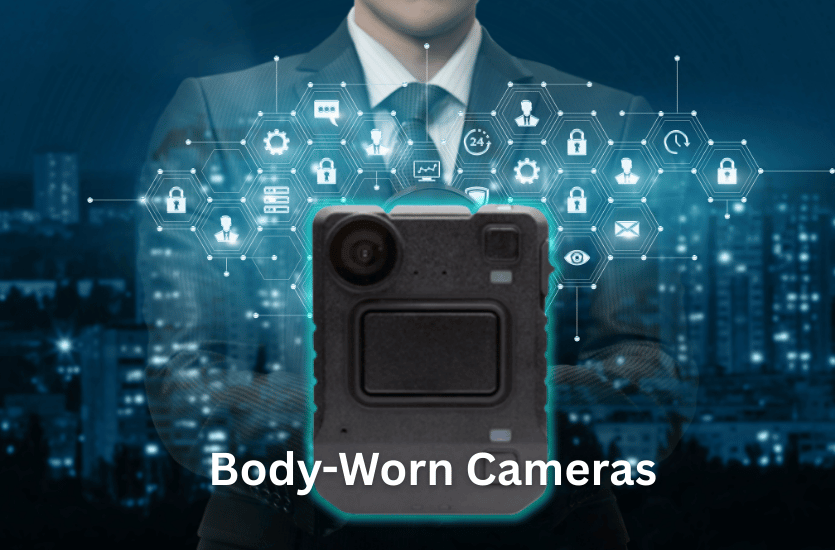
Body-worn cameras (BWCs) have become a powerful tool for enhancing accountability, transparency, and safety across a wide range of industries. Once primarily associated with law enforcement, these devices are now finding applications in private security, transportation, and healthcare, where organizations value their ability to document interactions and promote professionalism.
The global BWC market reflects this momentum: valued at over $2.12 billion in 2025, it is projected to reach $8.21 billion by 2035, growing at a CAGR of more than 14.5% between 2026 and 2035.
Beyond their practical role in recording events, BWCs also have a profound psychological effect. Both employees and citizens tend to adjust their behavior when cameras are present, leading to better communication, reduced conflict, and greater trust, an impact that makes BWCs a super important component in today’s workplace safety strategy.
The Psychology Behind Being Observed
The psychological effect of being watched has long been recognized as a powerful driver of human behavior. Research has shown that even subtle cues of observation, such as the presence of eyes on a poster, can increase charitable giving, reduce dishonesty, and influence cognitive performance. A 2015 study published in Frontiers in Psychology confirmed that awareness of observation is closely tied to shifts in social behavior, often encouraging honesty and cooperation while discouraging misconduct.
This effect is closely linked to the concept of self-awareness. When individuals know they are being observed, they monitor their own actions more carefully, aligning behavior with social norms and expectations.
The benefits of self-awareness include:
- Supporting personal growth and reflection.
- Improving self-control and emotional regulation.
- Strengthening mental health and resilience.
- Building stronger interpersonal relationships.
- Contributing to greater overall happiness and life satisfaction.
In this way, body-worn cameras function as behavioral nudges, aka subtle reminders that encourage professionalism, compliance, and accountability in both employees and the people they interact with.
How BWCs Influence Employee Behavior
Ask yourself these questions. If I were being watched, would I behave differently? Would I behave in a morally appropriate way? Would I be less likely to act immorally? Most people would answer “yes.” The presence of observation naturally shapes behavior. When you know your actions are visible, you are far less likely to take risks that could harm your reputation, your career, or another person.
If you were being watched, you would be less likely to steal, misuse resources, or engage in behavior that could cause harm. Instead, you’d be more inclined to act professionally, follow policies, and treat others with respect. Body-worn cameras reinforce this sense of accountability by serving as a constant reminder that actions are documented.
For employees, this leads to several positive outcomes:
- Stronger adherence to policies: Workers are more likely to follow rules and protocols consistently.
- More respectful communication: Interactions with colleagues and the public tend to remain professional.
- Improved decision-making under pressure: Knowing that footage may be reviewed encourages employees to de-escalate tense situations rather than escalate them.
- Reduced complaints and disputes: With fewer opportunities for misconduct, organizations see a decline in grievances and disciplinary cases.
In this way, BWCs not only act as a safeguard for the organization but also as a tool for employees to regulate their own actions and demonstrate professionalism in every interaction.
How BWCs Influence Citizen Behavior
Advocates of body-worn cameras often describe them as having a civilizing effect on both employees and the people they interact with. The very presence of a camera serves as a reminder that words and actions are being documented, which encourages more respectful, cooperative, and law-abiding behavior from all parties.
For citizens, this translates into noticeable changes:
- Lower aggression: People are less likely to act violently or confrontationally when they know their actions are on record.
- Higher cooperation: Instructions are more often followed without resistance when individuals are aware of accountability.
- Reassurance of fairness: Cameras signal transparency, reducing fear of bias or mistreatment.
Importantly, advocates also stress the role of BWCs in addressing excessive use of force. If cameras help reduce confrontations outright, the number of violent interactions between officers and civilians should fall. And in cases where force is used, video footage provides factual evidence that can protect good officers while holding abusive ones accountable. This ensures that misconduct is addressed quickly, whether through discipline, termination, or even criminal conviction, preventing repeat abuses and reinforcing public trust.
In this way, BWCs influence not only the behavior of citizens during encounters but also strengthen the long-term relationship between organizations and the communities they serve.
BWCs and Transparency
One of the greatest strengths of body-worn cameras lies in their ability to create transparency. When interactions are captured on video, disputes are no longer based on one person’s word against another’s. Instead, organizations, courts, and the public can review objective evidence of what actually occurred. This transparency fosters trust, reassures citizens, and provides employees with a layer of protection against false accusations.
Transparency also strengthens accountability. For example, when officers or employees act professionally, the footage validates their actions. On the other hand, when misconduct does occur, recordings provide indisputable proof that can be used to enforce discipline, remove unfit personnel, or support criminal charges. This ensures that issues are addressed swiftly and fairly, preventing repeat offenses.
By reducing ambiguity and providing a factual record, BWCs not only deter negative behavior but also build credibility for both individuals and organizations. Over time, this visibility encourages stronger relationships between agencies, businesses, and the communities they serve.
BWCs as Tools for De-escalation
Earlier, we acknowledged that when people know that footage can be reviewed later, they are more likely to de-escalate tense situations than escalate them. This effect works on both sides of an interaction. Employees recognize that their words and actions are recorded, so they often take extra care to remain calm, follow procedures, and use professional communication techniques. At the same time, citizens or clients tend to temper their responses, knowing that aggressive behavior could be captured and used as evidence.
De-escalation is one of the most important outcomes of body-worn camera programs. When stress levels rise, the awareness of observation acts as a psychological cue to slow down, think carefully, and avoid rash decisions. Instead of escalating force or confrontation, individuals are encouraged to choose dialogue, compliance, or compromise.
Research supports this impact. Studies have shown that agencies using BWCs often report a reduction in use-of-force incidents. By lowering the likelihood of confrontations spiraling out of control, cameras make interactions safer for both employees and the public.
Ultimately, BWCs don’t just capture what happens. They actively shape it. By reinforcing accountability and reducing the temptation to act aggressively, they create conditions where tense encounters are more likely to resolve peacefully.
Training and Behavioral Reinforcement
Body-worn camera footage can also become a valuable learning tool. By reviewing real-world encounters, organizations can identify what worked well, where mistakes were made, and how employees can improve their approach moving forward. This creates an opportunity for continuous growth and skill development that traditional classroom training often can’t match.
Some key ways BWCs support training and behavioral reinforcement include:
- Objective feedback: Employees can watch their own interactions and see firsthand how they came across, helping them self-correct and refine communication skills.
- Scenario-based learning: Supervisors can use clips from actual incidents to train teams on best practices, de-escalation strategies, or policy compliance.
- Performance recognition: Positive examples captured on video can highlight professionalism, boost morale, and reinforce desired behaviors across the workforce.
- Ongoing development: Regular review sessions allow employees to gradually strengthen their decision-making, empathy, and conflict resolution skills.
This use of BWC footage creates a feedback loop where employees not only avoid negative behavior but also actively build stronger habits. Over time, this leads to higher levels of professionalism, consistency, and confidence in handling complex situations.
Privacy and Ethical Considerations
The official motivation for introducing police body-worn cameras (PBWCs) is often centered around three expected outcomes:
- Providing evidence: BWCs can deliver objective, useful evidence in controversial interactions between employees (such as officers) and citizens.
- Deterring misconduct: The presence of cameras discourages undesirable behaviors such as misuse of force by police, assaults or harassment against officers, unwarranted complaints, or even bribery attempts.
- Building trust: As a follow-on effect, BWCs can increase public confidence and encourage cooperation by signaling fairness and transparency.
Perhaps the most widely cited evidence supporting these goals comes from a randomized controlled trial in Rialto, California, published in 2015. Involving 54 officers and nearly 1,000 shifts, the study found that use-of-force incidents were about twice as high in control conditions compared to when officers wore BWCs. Complaints against officers also dropped significantly, though results were not always statistically significant. While promising, experts caution that many of these studies involve small sample sizes and limited statistical power. Replication has sometimes been inconsistent, meaning organizations should view BWCs as one important tool rather than a perfect solution.
The BWC Privacy Question
Beyond effectiveness, the most sensitive concern surrounding BWCs is privacy. Cameras often capture people during vulnerable or traumatic moments. Critics worry that prejudicial or embarrassing footage might be released without consent, regardless of whether individuals were directly involved in a crime. This risk highlights the need for clear policies.
To address these challenges, many agencies and legislatures have introduced safeguards, such as:
- Informing individuals: Requiring officers to notify people when they are being recorded.
- Release protocols: Establishing strict policies on when and how footage can be shared publicly.
- Retention limits: Setting rules for how long footage is stored and for what purposes it may be used.
These measures aim to reduce the possibility of misuse, strengthen community trust, and strike a balance between transparency and the protection of personal rights. For BWCs to succeed, they must not only capture behavior but also demonstrate that captured data will be managed responsibly.
Business Benefits Beyond Public Safety
While body-worn cameras are often associated with law enforcement, their advantages extend far beyond policing. Many industries are adopting BWCs to enhance accountability, protect staff, and improve service delivery. In healthcare, for example, cameras can help deter aggression toward medical staff while documenting patient interactions for training and safety.
In transportation, drivers equipped with BWCs can provide objective evidence in cases of accidents, disputes, or passenger incidents, reducing liability for companies. Retail and hospitality organizations use BWCs as an additional layer of security, discouraging theft, fraud, or harassment while giving employees confidence in their daily interactions.
When paired with modern communication systems, such as radio integration and live-streaming features, BWCs deliver even greater value by enabling supervisors to monitor situations in real time and provide immediate support. For businesses looking to improve workplace safety, reduce conflict, and strengthen trust, BWCs represent a practical and future-focused investment.
The Future of Body-Worn Cameras
The future of body‑worn cameras is moving toward AI-enhanced tools that transform sizable video archives into actionable intelligence. A recent R Street Institute analysis shares how law enforcement agencies are increasingly deploying AI to process vast amounts of footage—automating tasks like transcription, incident flagging, and trend detection, while still relying on human supervision to guide decisions and preserve civil liberties.
Such AI platforms have the potential to accelerate evidence review, uncover patterns of misconduct, and spotlight best practices in communication and de‑escalation, making video an active aid, not just a record. However, this necessitates smart policy safeguards: robust oversight, transparency, and limits on facial recognition to protect rights even as these technologies expand in power.
For organizations outside traditional law enforcement, like healthcare, security, or transportation, this evolution means body-worn cameras will soon function as intelligent support systems, offering real-time insights and elevating situational awareness across industries.
Body Cameras and Behavior Change for a Safer Future
Throughout this discussion, one theme has remained clear: body cameras have a measurable influence on behavior. The psychological effect of being observed encourages employees to follow procedures, use professional communication, and de-escalate tense situations. At the same time, citizens often respond with greater cooperation, reduced aggression, and increased trust when interactions are recorded. This body camera behavior change dynamic not only promotes accountability but also helps prevent conflicts before they escalate.
As adoption expands beyond law enforcement into healthcare, transportation, retail, and security, body-worn cameras are proving to be valuable tools for transparency and safety across industries. And with advancements in AI and real-time integration, their role will only continue to grow.
EMCI Wireless is here to help organizations select, deploy, and integrate body camera solutions tailored to their unique needs. Contact us today to learn how body-worn cameras can strengthen safety, accountability, and trust in your workplace.