

Coverage maps are often the first thing buyers check when comparing radio systems. A quick glance at color shading can feel like a fast way to judge reach and reliability. Many assume that darker colors always mean better performance everywhere within that area. That belief is common, and understandable.
The reality is more nuanced. Coverage maps are helpful planning tools, but they are not promises of how a radio will perform in every setting. They are built on models, averages, and assumptions.
This is where radio coverage maps explained become important. Local conditions such as building density, terrain, and indoor use often have more influence on performance than a color gradient on a map.
What Is Radio Coverage?
Radio coverage describes how far a radio signal can travel and still be heard clearly. It explains where communication is possible and where it starts to drop off. Coverage is not a fixed circle around a transmitter. It changes based on many conditions along the signal’s path.
A radio signal weakens as it moves away from its source. Objects in its path can also block or bend it. Because of this, two users at the same distance may have very different results.
Radio coverage is best thought of as a range of probability. This is a core idea behind radio coverage maps, explained.
Here are the factors that influence radio coverage:
- Distance from the transmitter: Signals fade as range increases
- Frequency band: Lower frequencies often travel farther
- Transmit power: Higher output can extend reach
- Antenna height and placement: Elevation changes coverage patterns
- Terrain: Hills, valleys, and slopes affect signal travel
- Buildings and structures: Dense materials reduce signal strength
What Are Radio Coverage Maps?
Radio coverage maps are visual tools that estimate where a two-way radio signal may work. They are often shown as color-coded areas on a map. Each color represents a predicted signal range or strength.
For two-way radios, these maps help buyers compare options before making a purchase. They offer a quick way to see how far a radio might reach in a given area. This is why coverage maps are often used early in the decision process.
Most maps are created using computer models. These models rely on general assumptions about terrain, building density, and antenna height. The results are then displayed as smooth color gradients. While this looks simple, real conditions are rarely that clean.
It is also important to understand what these maps are meant to do. They estimate coverage based on averages. They do not account for every hill, building, or wall. Indoor use, in particular, can look very different from what a map suggests.
As we shared earlier, radio coverage maps are best used as planning tools, not promises. They offer a starting point for understanding where a two-way radio might work, based on modeled data. Real use often looks different once buildings, terrain, and indoor conditions come into play. Knowing how to explain radio coverage maps helps teams ask better questions, set realistic expectations, and choose radios that match where and how they will be used—not just what the colors suggest.
Main Types of Radio Coverage Maps
Not all coverage maps serve the same purpose. Each type answers a different planning question. That’s why comparing maps without knowing what they represent can lead to confusion.
At a high level, radio coverage maps fall into a few broad categories. Each one looks at signal behavior from a different angle. Understanding the differences helps teams choose the right tool for the job.
Common map types include:
- Signal strength maps: Show how strong a signal may be at various locations
- Propagation maps: Illustrate how radio waves are expected to travel across terrain
- Composite or blended maps: Combine multiple data inputs for broader planning views
The sections below break down the most common map types and explain when each one is most useful for two-way radio planning.
Signal Strength Maps: What They Show
Signal strength maps display how powerful a radio signal is expected to be across an area. They focus on signal level, not voice quality. These maps usually rely on decibel measurements and are shown with color shading. Darker colors often indicate stronger signals. Lighter colors suggest weaker reach.
Signal power is measured based on predicted loss as the signal travels away from the transmitter. The farther it goes, the more strength it loses. The map shows where a radio should reach under modeled conditions.
Common use cases include:
- Comparing radios that operate on different power levels
- Reviewing general outdoor coverage across a service area
Signal strength maps work well for high-level comparisons. They help users understand the relative reach between systems. They also provide a quick visual reference.
Misunderstandings are common. A strong signal does not always mean clear audio. Interference, noise, and reflection can distort sound. Another issue is indoor use. Most signal strength maps assume outdoor conditions. Walls, floors, and metal structures can reduce the signal once a radio moves inside. The map may still show strong color, even when audio suffers.
Propagation Maps: What They Show
Propagation maps focus on how radio signals move through space. Instead of only showing signal power, they model signal propagation across distance and terrain. These maps estimate how a signal bends, reflects, or weakens as it spreads outward from a transmitter.
Propagation modeling looks closely at elevation, frequency, and line of sight. Hills, valleys, and open land all affect how far a signal can travel. Lower frequencies often reach farther. Higher frequencies may drop sooner, especially around obstacles.
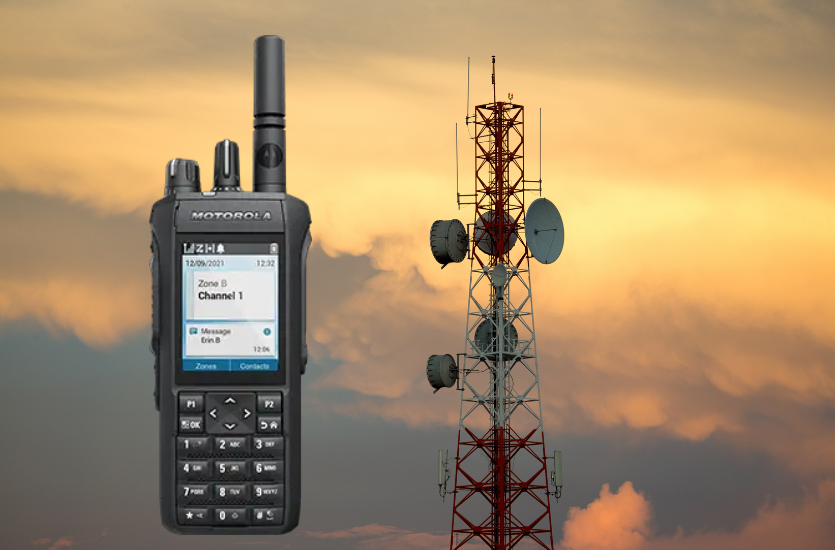
These maps are commonly used when planning systems like MOTOTRBO Capacity Plus, where coverage shape and site placement matter for channel reuse and consistent performance across a service area. Understanding how signals propagate helps planners predict where coverage may overlap or thin out.
Typical use cases include:
- Planning wide-area radio systems
- Reviewing coverage in rural or mixed environments
Propagation maps differ from signal strength maps in purpose. They emphasize reach and coverage patterns rather than signal level alone. Because they rely on averages and simplified assumptions, they can appear optimistic. Trees, buildings, and local interference often change results once radios are in daily use.
Why Site-Specific Factors Matter More Than Map Colors
Coverage maps give a helpful overview, but they cannot reflect every condition a two-way radio faces in daily use. Real coverage is shaped by what exists between the radio and the signal source. That is why two locations with the same map color can perform very differently.
Several physical and environmental factors play a larger role than color shading alone:
- Building density and materials: Concrete, steel, and glass weaken signals far more than wood or drywall. Dense downtown areas behave differently than open spaces.
- Elevation and terrain: Hills, valleys, and ridgelines can block or bend signals. Even small elevation changes can alter performance.
- Indoor vs outdoor use: Signals shown on maps are often based on outdoor assumptions. Inside buildings, walls and floors reduce signal reach.
- Urban, suburban, and rural layouts: Cities introduce reflection and interference. Rural areas may have fewer obstacles but longer distances.
- Radio placement: A radio worn on a belt, used inside a vehicle, or placed near metal objects may perform differently than expected.
These variables explain why coverage can change from one block to the next. Maps provide a starting point, but local conditions decide how a radio actually performs in the field.
What Radio Coverage Maps Don’t Show
Radio coverage maps are helpful planning tools, but they leave out several real-life variables that affect two-way radio performance.
Common gaps include:
- Interference from other systems: Nearby radios, cellular towers, and electronic equipment can disrupt signal quality.
- Weather and seasonal foliage: Rain, snow, and even full summer tree cover can weaken signals that looked strong on a map.
- User behavior and radio placement: A radio clipped to a belt, used inside a vehicle, or held near the body may perform very differently from a modeled device.
- Infrastructure changes over time: New buildings, construction projects, or added metal structures can alter coverage after a map is created.
Because of these unknowns, maps cannot fully predict daily performance. On-site testing fills the gaps by showing how radios work in actual conditions. Field tests reveal dead zones, audio clarity issues, and problem areas that maps alone cannot predict.
How to Use Radio Coverage Maps the Right Way
Radio coverage maps work best when they guide planning, not decisions by themselves. Use them as a starting point, then layer in real conditions.
- Start with the purpose: Define how and where the radios will be used before reviewing any map.
- Compare, don’t assume: Use maps to compare coverage patterns between radios or systems, not to predict exact performance.
- Match the map to the question: Signal strength maps and propagation maps answer different planning needs.
- Think about the environment: Consider buildings, terrain, and indoor use that maps may not reflect.
- Plan for margins: Expect coverage to vary from what the map suggests, especially at the edges.
- Test in the field: On-site testing shows how radios perform in actual conditions.
- Revisit over time: Changes to buildings, foliage, or infrastructure can shift coverage.
When used this way, coverage maps support smarter planning and fewer surprises during deployment.
Radio Coverage Maps Help You Make Better Decisions
Radio coverage maps offer a useful starting point. They show predicted reach, not guaranteed performance. When radio coverage maps are explained properly, they reflect models built on assumptions about terrain, structures, and signal behavior. Real conditions often differ. Walls, elevation changes, and local interference can significantly impact results. That’s why it helps to look past colors and gradients and ask how a system will work at your exact location.
With the right context, maps support smarter planning and clearer expectations. Teams that understand how these maps are built can ask better questions and avoid surprises. EMCI Wireless helps organizations across Florida interpret coverage data with practical insight grounded in real operating environments.