
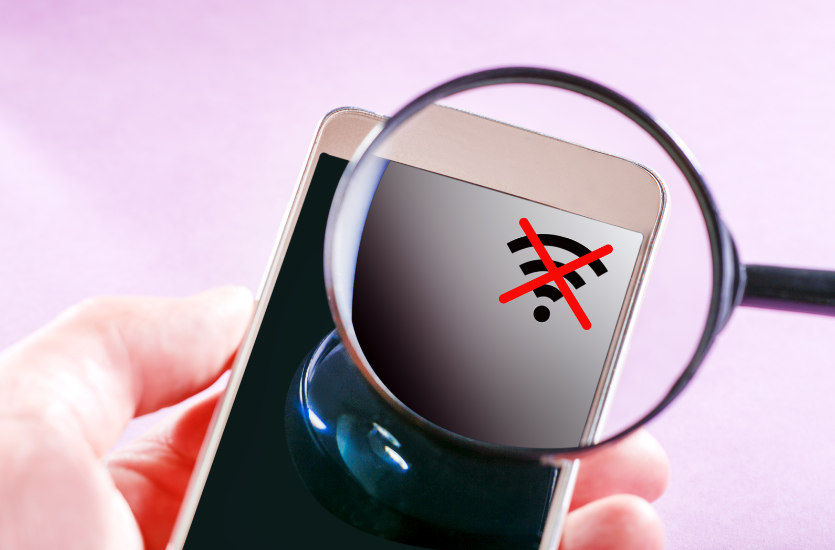
Surely, it’s happened to you. You pull out your phone to place a call. You see that the bars are full. You pop in the phone number and hit that green button. And then? Nothing. A similar situation happens when you try to send a text. It even happens when you try to pull up a website. Nothing happens.
This situation happens constantly at concerts, sporting events, conventions, and packed festivals. Thousands of people stand in the same space, all staring at full signal bars, all wondering why nothing works.
The answer comes down to something most people have never considered: signal strength vs. signal quality. These two things are not the same. Understanding the difference can explain why your phone appears connected but behaves as if it is not.
Full Signal Bars Don’t Always Mean Reliable Communication
Signal bars on your phone represent one thing: how much signal your device is receiving from a nearby tower or access point. That is it. They do not tell you how many other people are sharing that same connection. They do not tell you how clean the signal is. They do not tell you whether the network has any room left for your call or message.
Your device measures signal strength and translates it into bars. More bars generally mean you are closer to a tower or have a clearer path to it. But reliable communication depends on much more than proximity.
Think about a packed stadium on game day. Every person in that venue may have full bars. But tens of thousands of devices are all trying to use the same network at the same time. The tower can only handle so much traffic. The bars stay full. The network grinds to a halt.
That is the gap between signal strength and signal quality, and it matters far more than most people realize.
Understanding Signal Strength
Let’s get on the same page about what we mean when we talk about signal strength. This information will help you better understand the differences between signal strength and signal quality.
What Is Signal Strength?
Signal strength measures how much radio energy your device receives from a transmitter. A stronger signal generally means you are closer to the source or have fewer physical barriers between you and it.
Engineers measure signal strength using a value called RSSI, which stands for Received Signal Strength Indicator. RSSI is expressed in negative numbers, measured in decibels relative to a milliwatt (dBm). A reading of -50 dBm is strong. On the other hand, a reading of -90 dBm is weak. The closer the number is to zero, the stronger the signal.
Your phone’s signal bars are based on RSSI. When RSSI is high, your bars go up. When it drops, your bars go down.
| What Signal Strength Can Tell You | What Signal Strength Can’t Tell You |
| How close you are to a transmitterWhether coverage is available in a given areaAreas where signals may be too weak to connectGeneral reception conditions in a location | Whether you can actually complete a callHow much bandwidth is available to your deviceHow congested the network isWhether interference is affecting communication quality |
Signal strength vs signal quality is not a minor distinction. It is the difference between knowing a road exists and knowing whether traffic will let you use it.
Understanding Signal Quality
And now, let’s talk about signal quality.
What Is Signal Quality?
Signal quality measures how clean and usable a wireless signal actually is. A signal can be strong and still be nearly useless if it is corrupted, distorted, or buried in interference.
Communication systems care about whether the information being transmitted arrives in a form that can be understood. That requires more than power. It requires clarity.
Understanding SNR (Signal-to-Noise Ratio)
One of the most important measures of signal quality is SNR, or Signal-to-Noise Ratio. SNR compares the strength of the desired signal to the level of background noise or interference present.
Picture trying to have a conversation in a quiet library. You can hear every word clearly. That is high SNR. Now picture trying to have that same conversation at a crowded concert. The music, the crowd, and the noise all compete with the voice you are trying to hear. That is low SNR.
Simply stated, the higher the SNR, the cleaner the communication will be. And on the flip side, if the SNR is lower, the system has to work harder to separate useful information from background interference, and sometimes it cannot.
Why Signal Quality Often Matters More Than Signal Strength
- Reduced interference leads to more reliable connections
- Better voice clarity on calls
- More dependable data transmission
- Fewer dropped connections
- Better overall experience for the user
The message? A weak but clean signal will often outperform a strong but noisy one.
The Stadium Problem: Why Thousands of Full Bars Can Still Fail
Large events put wireless networks under enormous pressure. When 60,000 people pack into a stadium, they bring 60,000 devices. Many of those devices are always on the search for a signal, loading content, sending messages, or streaming video.
Cellular networks are literally designed so that they can handle a certain number of users at a time. When demand far exceeds that capacity, the network becomes congested. Think of a highway built for 1,000 cars trying to handle 10,000 cars at once. The road still exists. The cars still have tires. But nothing moves.
Everyone in that stadium may see full bars because the tower is close and the RSSI is high. But the network has no bandwidth left to give. Calls fail. Messages queue. Data stalls.
This problem shows up at:
- Major sporting events
- Music festivals and outdoor concerts
- Trade shows and conventions
- Large emergency situations where many people try to communicate at once
In public safety scenarios, network congestion is not just inconvenient. It can directly affect response and what happens after that.
How Interference Impacts Signal Quality
Interference occurs when unwanted signals compete with or corrupt the signal your device is trying to use. It can degrade communication even when the signal strength appears strong.
Modern wireless environments are dense. Cellular networks, Wi-Fi networks, Bluetooth devices, two-way radios, and dozens of other RF sources all share limited frequency space. When too many signals occupy the same environment, they can interfere with each other and reduce signal quality.
Common Sources of Interference
- Nearby transmitters operating on overlapping frequencies
- Crowded RF environments with too many competing devices
- Electronic equipment generating unintentional RF emissions
- Poorly designed wireless systems with inadequate separation
- Physical obstructions that cause signals to reflect and collide
Interference is one of the most common reasons a device with strong signal strength still struggles to maintain a reliable connection.
Signal Propagation and Why Wireless Signals Behave Differently Than Expected
Radio signals do not behave like water flowing through a pipe. They travel through the air and interact with everything around them. How a signal propagates through a space determines both where coverage exists and how reliable that coverage will be from one spot to the next.
What Is Signal Propagation?
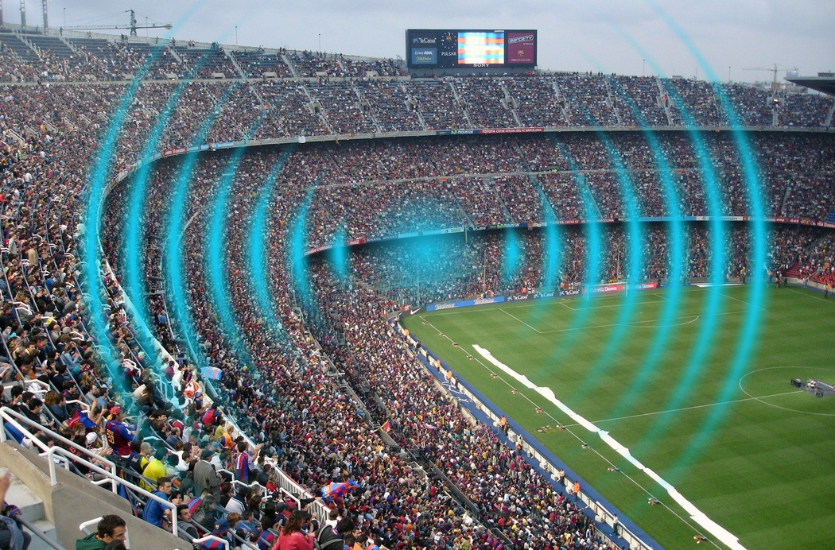
Signal propagation describes how radio waves travel from a transmitter to a receiver. Radio waves do not simply travel in a straight line and arrive cleanly. They reflect off surfaces, get absorbed by materials, and bend around obstacles through a process called diffraction.
Each of these behaviors affects both signal strength and signal quality in ways that are not always predictable.
Why Coverage Can Change From One Area to the Next
Coverage is rarely uniform. A signal that works perfectly in one spot may degrade significantly just a few feet away. This happens because of how radio waves interact with the environment.
- Open outdoor spaces generally allow signals to travel farther with less interference
- Dense urban environments create complex reflection patterns as signals bounce off buildings
- Industrial facilities often contain heavy machinery that generates RF interference
- Warehouses with metal shelving and concrete walls can scatter and absorb signals unpredictably
- Large campuses may have areas that receive strong signals from multiple towers, creating interference rather than coverage
Understanding how signals propagate helps explain why coverage issues often have less to do with signal strength and more to do with signal quality in a specific location.
Why Wireless Signals Break Down Inside Buildings
Building materials are one of the biggest factors in wireless signal degradation. Concrete, steel, and low-E glass all absorb or reflect radio waves. Multi-story structures create layered obstructions that compound the problem.
A device inside a building may show adequate signal strength while still performing poorly. The signal is there, but it has been weakened and distorted by the time it passes through the structure. Call quality suffers. Data speeds drop. Connections become unreliable.
In-building wireless systems are designed specifically to address this. Rather than relying on outdoor towers to punch through walls, these systems bring the signal inside and distribute it where users actually need it.
Here are some of the most common coverage challenges that we experience indoors:
- Dead zones where signal cannot reach at all
- Inconsistent coverage that varies by floor or room
- Signal reflections that create interference inside the building
- High device density in conference rooms, lobbies, or common areas
- Structural barriers like elevator shafts, stairwells, and mechanical rooms
Signal Strength vs Signal Quality in Business-Critical Communications
In some environments, communication failures carry serious consequences. Public safety agencies, utility companies, transportation networks, manufacturers, and large enterprises all depend on wireless systems that perform when it matters most.
In these settings, signal strength vs signal quality is not an abstract concept. It is a design requirement. Engineers evaluating wireless systems for mission-critical use do not stop at measuring RSSI. They also measure SNR, assess interference levels, model propagation paths, and plan for capacity under peak demand.
A system that looks strong on paper can still fail in practice if signal quality has not been properly assessed. For public safety communications in particular, the stakes of that failure are too high to ignore.
Reliable mission-critical wireless systems require both strong coverage and high signal quality across the entire area where communication must occur.
How EMCI Wireless Helps Organizations Build More Reliable Wireless Systems
EMCI Wireless works with organizations that cannot afford to have communication gaps. That includes public safety agencies, hospitals, utilities, transportation hubs, and enterprise campuses.
And we don’t just measure bars. Here’s what we take a look at during your site survey and consultation:
- Wireless network design based on actual RF conditions
- Coverage analysis that accounts for building materials and propagation
- Capacity planning that matches network resources to expected demand
- Public safety communications consulting and system design
- In-building wireless solutions that deliver reliable coverage where it is needed
Solving communication challenges requires looking at the full picture. That means evaluating both coverage and signal quality metrics, not just one or the other.
If your organization is dealing with dropped calls, unreliable data, or coverage gaps in mission-critical areas, contact EMCI Wireless to discuss what a properly designed wireless system can do.
Strong Signals Are Not Enough
Signal bars give you one piece of information. They tell you how much radio energy your device is receiving. They do not tell you whether the network is congested, whether interference is degrading your connection, or whether the signal quality is high enough to support reliable communication.
Understanding signal strength vs signal quality means looking at the full picture: RSSI, SNR, interference levels, propagation conditions, and network capacity. All of these factors work together to determine whether your wireless system performs when you need it.
For organizations where communication cannot fail, designing around signal quality, not just coverage, is the only standard that matters.
Contact EMCI Wireless to learn how a properly designed wireless system can address both signal strength and signal quality across your facility or network.
Frequently Asked Questions
What is the difference between signal strength and signal quality?
Signal strength measures how much radio energy reaches your device, usually expressed as RSSI in dBm. Signal quality measures how clean and usable that signal is, often assessed through SNR. A strong signal can still have poor quality if it is noisy or heavily interfered with. Both factors affect how well communication actually works.
Can I have full bars and still experience dropped calls?
Yes. Full bars indicate strong signal strength from a nearby tower. They do not reflect network congestion, interference, or available bandwidth. In crowded venues, thousands of devices may all show full bars while competing for the same limited network resources. The result is failed calls, slow data, and undelivered messages.
What is SNR, and why is it important?
SNR stands for Signal-to-Noise Ratio. It compares the power of the desired signal to the level of background noise or interference. A high SNR means the signal is clean and easy to process. A low SNR means the signal is being overwhelmed by noise, which leads to errors, distortion, and communication failures. SNR is one of the most important indicators of actual communication quality.
Why do cellular networks struggle during large events?
Cellular networks are designed with a certain capacity in mind. When a large event brings tens of thousands of users into a small area, demand can far exceed what the network is built to handle. Each user may have a strong signal, but the network has no capacity to process all simultaneous requests. This congestion causes the same failures people associate with a weak signal, even when bars are full.