
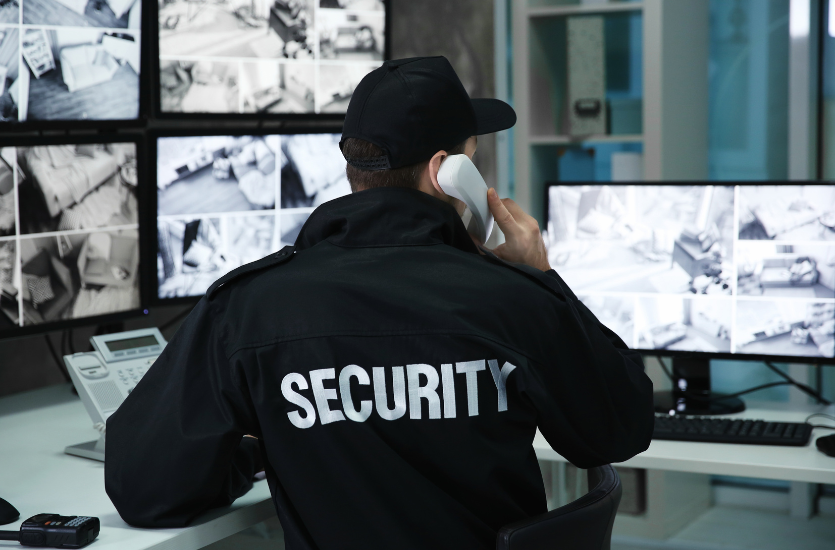
As business owners, protecting what you’ve built is always top of mind. But we all see the headlines. The Impact of Theft & Violence 2025 report found retailers saw an 18% rise in shoplifting incidents in 2024 compared to 2023, along with a 17% increase in threats or acts of violence tied to those events. And that’s just what retailers are seeing.
Security officers help protect people, property, and daily operations in the face of risks like these. And these professionals aren’t just hired to walk around and watch what’s happening. These roles require awareness, the ability to think on their feet, and some pretty awesome communication skills.
In this article, we’re going to talk about the most common duties that security guards have, the role of two-way radios in security guard communication, and whether or not your business can benefit from the role.
What is a Security Guard?
We’ve all seen popular movies like Night at the Museum, Paul Blart: Mall Cop, and of course, Security. While the first two are rooted in humor and the last is based on something a bit more terrifying than statues coming to life, there is a common theme: security guards do far more than you think they do.
Simply said, a security guard is responsible for protecting people, property, and assets by monitoring activity, preventing incidents, and responding when something goes wrong. Their day-to-day work often includes patrolling assigned areas, watching surveillance systems, controlling access points, and stepping in during emergencies.
It’s also helpful to understand how security guards differ from law enforcement. Security officers are typically hired by private businesses or organizations and focus on prevention and on-site response. Law enforcement officers, on the other hand, are public officials with broader legal authority, including making arrests and conducting criminal investigations.
You’ll find security guards at a lot of different businesses. You’ll see them patrolling commercial properties, walking the halls of hospitals, and helping with crowd management at events and venues. You’ll also see them on construction sites and within private residential communities. The thing to understand here is that if security guards didn’t deliver a much-needed service, you wouldn’t be seeing them.
Why Security Guards Are a Must for Many Businesses
As we said, if security guards weren’t delivering a valuable service, business owners wouldn’t hire them. Their presence alone could be the difference between your business becoming the target of a crime or whether the perp targets someplace else.
In our research, we came across some studies that have found just how important patrol activity is. Consider that locations that saw 41% more patrol visits and 29% more time spent on-site experienced a 16% drop in victim-generated crimes across those properties. At the same time, there was a 49% increase in police-generated detections at targeted locations.
Those are some pretty powerful statistics. So here’s the thing to remember: when trained professionals are visible and engaged, it changes behavior. It means a lower likelihood that potential offenders will act, and suspicious activity is more likely to be identified early.
If you’re like most business owners, that’s the kind of peace of mind you are looking for. But it begs the question: just what are the most common duties of security guards? We’ll answer that question in the next section.
10 Common Security Officer Duties
Whether you are thinking of hiring a security guard to help protect your business or you simply want to better understand security officer duties, we’ve got you covered. Here’s what these trained professionals are typically expected to do.
1. Patrolling Property
Patrolling is one of the most visible security guard duties and responsibilities. Officers walk or drive through assigned areas, checking for suspicious activity, safety hazards, or anything out of place. Their presence alone can discourage unwanted behavior. While covering large properties, two-way radios help officers stay connected, report issues quickly, and request support when needed.
2. Monitoring Surveillance Systems
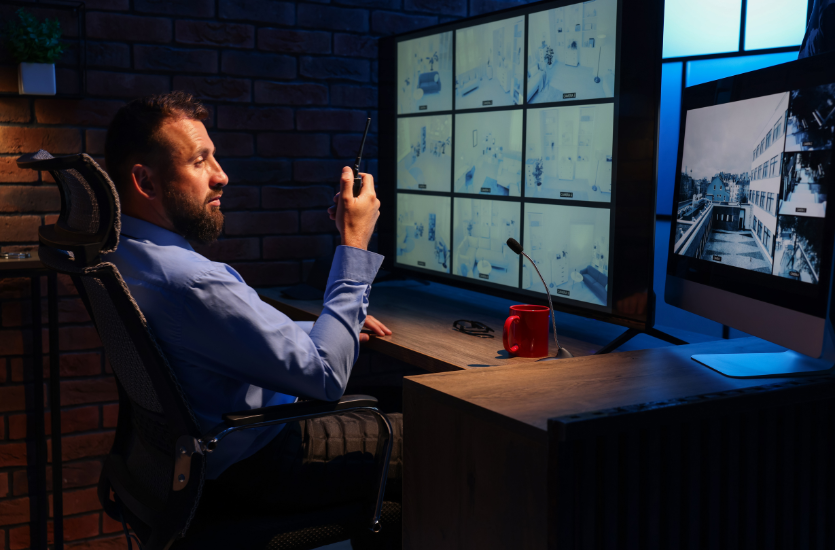
Security officers often monitor CCTV systems and other surveillance tools to keep an eye on activity across a property. They look for unusual behavior, potential risks, or policy violations. When something stands out, they coordinate with on-site personnel. Communication tools allow officers to respond quickly, even when incidents are first identified on a screen.
3. Controlling Access Points
Managing who enters and exits a property is a core part of a security guard’s duties and responsibilities. This includes verifying IDs, checking credentials, and maintaining visitor logs. By preventing unauthorized access, officers help protect both people and assets. Radios allow teams stationed at different entrances to stay in sync and share updates instantly.
4. Responding to Emergencies
Security officers are often the first to respond to fires, medical issues, disturbances, or other urgent situations. They must act quickly while coordinating with others on-site. Tools like the Motorola R7 portable radio can help keep communications clear when people are under pressure. This means a better ability to relay information fast, ask for help, and keep the situation under control.
5. Writing Detailed Incident Reports
No one likes to spend their time documenting incidents. But the truth is that this documentation, when used as part of a post-event evaluation, can help identify things that can be done differently in the future. And for that reason, security officers record incidents, observations, and actions taken during their shift. These reports support investigations, compliance requirements, and internal reviews.
6. Providing Customer Service
Security officers often serve as the first point of contact for visitors, employees, or residents. Being greeted by a security guard can shift perception, adding a sense of safety compared to a traditional greeter. Officers answer questions, give directions, and assist when needed, all while staying alert. Radios help them quickly get answers or support when assisting the public.
7. Enforcing Rules and Policies
Your business may have different rules to enforce than another business down the road. Security guards are expected to uphold the rules set for your business. This can mean something as simple as addressing a minor violation or handling a larger concern. And throughout it all, security guards have the background and training to handle these things calmly and professionally. Further, you can expect the security guard on your team to coordinate with supervisors or management when situations escalate.
8. Monitoring Alarms and Security Systems
Security guards are tasked with investigating the situation when alarms are triggered. This can involve checking the area, coordinating with other team members such as the business owner or office manager, and contacting emergency services if necessary. On larger properties or campuses, security personnel may rely on MOTOTRBO mobile radios to help teams stay connected when these situations get a bit intense.
9. Crowd Control and Event Security
Managing large groups is another common responsibility, especially at events or busy venues. Officers help prevent overcrowding, guide foot traffic, and watch for potential issues. Studies also show the value of a visible security presence. Pew Research Center found that 49% of U.S. parents believe having police or armed security in schools is a very or extremely effective way to help prevent school shootings. Radios help teams stay aligned in busy environments.
10 Collaborating with Law Enforcement and First Responders
As we shared earlier, security guards are not members of law enforcement. However, they are trained to communicate and collaborate with police officers and other emergency personnel. Security guards understand what information to share (versus what might be more frivolous or inconsequential to the situation), and they know who to share it with to enable fast coordination and response.
Communication Technology Supports Security Teams
We know we talk about this a lot, so please forgive us in advance. But here’s the thing: the type of communication technology that you use in your organization really does matter. Sure, you can use cell phones to communicate. Sure, you can send emails. But is that really what you want to rely on in the event of an emergency?
We can’t emphasize enough that communication really is at the center of daily security operations. From routine patrol check-ins to coordinating responses during an incident, officers rely on fast, clear communication to do their jobs well. Delays or missed messages can create confusion, especially when multiple team members are involved or when situations change quickly. That’s why many security teams turn to two-way radios instead of relying only on phones or email.
Here’s why we suggest that portable two-way radios are the primary communication tools used by security guards:
- Instant communication across distances
- Group coordination
- Reliability compared to cell phones
At EMCI Wireless, we work with organizations to provide professional communication solutions that support security teams in the moments that matter most.
Skills That Support Strong Security Officer Performance
Even though we’re in the business of walkie-talkies and communication technology, we’d be remiss if we didn’t talk a bit about skills. You can invest in the latest and greatest two-way radios, video security systems, and more, but it won’t matter if you don’t hire the right person for your security needs.
In her book Grit, Angela Duckworth shares a simple but powerful idea: talent x effort = skill. In other words, natural ability only goes so far. Effort is what turns that ability into strong performance over time. That matters when hiring a security officer. You don’t just want the first resume that comes your way. You want someone who shows up, stays alert, and takes their role seriously every day.
Look for candidates who bring:
- Strong situational awareness
- Clear communication skills
- Attention to detail
- Sound judgment under pressure
- Reliability and professionalism
Choosing the Right Tools for the Job
Let’s wrap things up by talking about tools. And clearly, when we’re talking about security officers and their responsibilities, we’re not just talking about the uniform and a good pair of steel-toed work boots.
Today’s security teams rely on a mix of communication equipment to stay connected and aware of what’s happening around them. Two-way radios are one of the most widely used tools, along with surveillance systems and access control technology. Portable radios are ideal for officers on foot patrol, allowing them to move freely while staying in touch. Mobile radios, often installed in vehicles or at command stations, are better suited for larger properties where long-distance coverage matters.
Reliability is a big part of the conversation. Communication tools need to work when it counts. Dropped calls from a bad cell connection or delayed messages because people aren’t checking their emails every second can slow response times and create confusion.
That’s where EMCI Wireless can help change the game. We provide communication solutions designed to support security teams. And, it’s these very solutions that help keep people connected when it really matters.
The Value Behind Security Officer Duties
Ultimately, security officers and guards play a significant role in keeping your business safe and secure. Their daily responsibilities help reduce risk, improve awareness, and create a stronger sense of safety for employees and visitors. But even the most skilled professionals can only do so much without the right tools in place.
Clear, dependable communication makes a difference in how quickly teams can respond and coordinate. That’s why many organizations invest in portable and mobile two-way radios to support their security efforts.
At EMCI Wireless, we provide communication solutions designed for security teams and organizations of all sizes. If you’re ready to strengthen how your team communicates, reach out to our team for a free consultation to help you find the right equipment for your needs.