
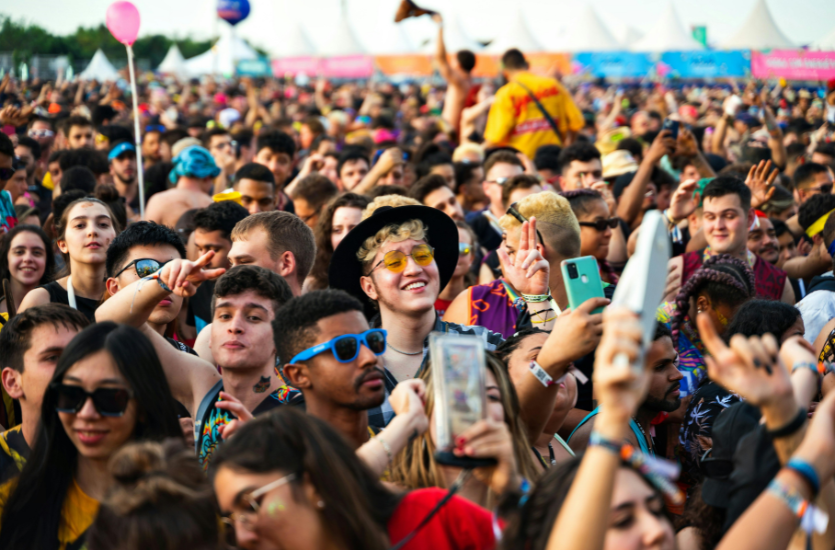
Every once in a while, you see it on the news. Crowds getting out of control at sporting events, concerts, and graduation ceremonies. And though crowd control has always been a challenge, it sure seems that things have gotten worse in recent years. Perhaps it’s increasing social anxieties or the political climate that is causing tensions. But more likely than that, it’s poor crowd management techniques.
When venues don’t have the proper controls in place, things can escalate quickly. One small disagreement between two people can suddenly involve others, and before you know it, mayhem ensues.
In this article, we’ll explain in more detail what crowd management is, why crowds can get out of control, and the techniques that can be used to keep everyone calm and enjoying the event.
What is Crowd Management?
Let’s start by answering the obvious question: What is crowd management? Simply defined, it’s the process of planning and supervising how large groups of people move and interact in a shared space. The goal is to keep things organized so attendees can move easily and enjoy the experience without unnecessary confusion or congestion. This means thinking ahead and anticipating entrances, exits, walking paths, signage, and staff placement so that people naturally flow in the right direction.
We’d be remiss if we didn’t also mention the difference between crowd management and crowd control. Crowd management is proactive. It focuses on planning and preparation before an event begins. Crowd control, on the other hand, is reactive and typically involves responding after a situation has already started to escalate.
Crowd management comes into play in a lot of different places, including but not limited to:
- Public festivals and concerts
- Sporting events and stadiums
- Airports and transportation terminals
- Convention centers and trade shows
- Retail environments during major sales such as Black Friday
Why Do Crowds Get Out of Control?
All of those places we mentioned sound fun, right? And when we’re having fun, we want to keep having fun, don’t we? The last thing we want is for something to happen that shuts down the event, or perhaps worse, jeopardizes our safety. So then that begs the question: Why do crowds get out of control in the first place?
We touched on this a bit earlier. Is it the political climate? Sure, it can be a contributor, but the truth is that politics have always created division. Are social anxieties and emotions taking over, causing people to act out of turn? Maybe.
But in reality, it’s more likely that the situation simply wasn’t planned well enough to handle the size or movement of the crowd. When large groups gather, even small issues can quickly snowball if there are no systems in place to guide people and keep things organized.
Large groups of people also behave differently than individuals. Psychologists have long observed that crowds can become highly suggestible. In simple terms, people often look to those around them for cues on how to react. If one person becomes frustrated or panicked, that reaction can quickly influence others nearby. This is one reason it is sometimes difficult to determine whether crowd accidents are actually increasing over time or simply receiving more media coverage.
Here are the most common problems that can lead to crowd disruptions (and those out-of-control situations that you see on your favorite news channels):
- Limited entrances or exits that create bottlenecks
- Poor signage that leaves attendees unsure where to go
- Sudden schedule changes or delays
- Not enough staff to monitor busy areas
- Communication gaps between event personnel
When these issues happen at the same time, frustration can build and tensions may rise. This is why strong crowd management at events focuses on planning ahead so small problems do not turn into larger ones.
Best Crowd Management Strategy #1: Control Entry and Exit Points
Now, let’s get to the topic at hand: how to keep crowds managed and under control in the first place. And it starts with managing entries and exits. Why? When something happens, the common human response is to fight or flee. And either one of these reactions can be problematic, especially if you haven’t thought through how people can get into or out of a venue.
A well-designed entry and exit plan helps people move rather than gather in one crowded area. When possible, entrances and exits should be separated so that people arriving do not collide with those leaving. This keeps traffic moving in a clear direction and reduces confusion near doorways. This can also be helpful if additional emergency or law enforcement personnel need to arrive on a scene.
Ticket checkpoints and security screening areas should also be arranged so several lines can move at the same time. Barriers and stanchions can guide guests through these areas and keep people from crowding toward the front.
Exit routes are just as important. People are looking for signs that tell them how to get out quickly after an event, especially if an emergency occurs. And the communication between staff who are manning both entrances and exits is also really important. Teams can open additional lanes or redirect guests to keep lines moving.
Best Crowd Management Strategy #2: Use Clear Visual Signage and Wayfinding
We’ve talked about the need for clear signage in several of our past blog posts. Signage is a key component in emergency preparedness (not to mention, it’s simply a good business practice overall).
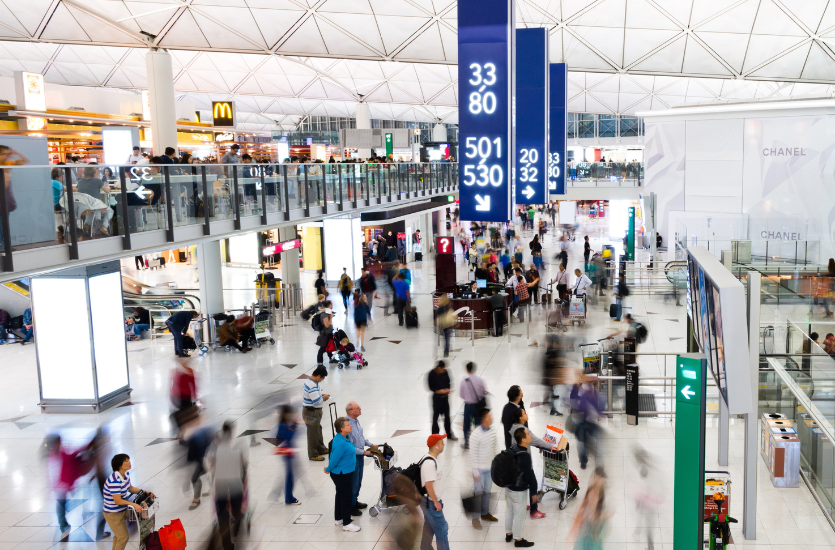
Clear signage plays a super important role in guiding large groups through a space. When people can quickly see where they are supposed to go, they tend to move with more purpose and less hesitation. This helps reduce congestion and confusion.
Directional signs pointing to entrances, exits, and restrooms allow guests to make quick decisions without stopping to ask for help. Maps placed near entrances or gathering areas can help attendees orient themselves and understand the venue’s layout. Some organizations also use color-coding or numbered zones to guide people to specific sections. Temporary signage can also be helpful when conditions change, such as during peak periods or construction.
Best Crowd Management Strategy #3: Strategic Staff Placement
Have you ever noticed that event and venue staff seem to be positioned prominently at events? Sure, you might see some wandering throughout the venue, but more often than not, they are strategically and predictably placed.
When trained team members are positioned in predictable locations, guests know where to go for directions or assistance. This helps prevent confusion and keeps people moving through the venue in an orderly way. You may also notice that many staff members carry portable two-way radios to stay in contact with the rest of the team, but we will talk more about that later.
Here are the most common placements that you will see, regardless of the type of event you are attending:
- Personnel positioned at entrances and exits
- Staff stationed near high-traffic intersections
- Team members assigned to monitor stairways and escalators
- Personnel stationed near restrooms, concessions, or merchandise areas
- Staff near emergency exits and evacuation routes
Though, as attendees at events, we tend to view these people as those who can answer our questions and guide us, they are often tasked with much more. Staff members are encouraged to, and expected to, also watch for early signs of congestion. If crowds begin building in one area, teams can redirect foot traffic before the situation becomes difficult to manage.
Best Crowd Management Strategy #4: Communication Protocols for Event Teams
Communication breakdowns are one of the most common challenges during large gatherings. When staff members cannot quickly share information, small issues can escalate before anyone has time to respond.
That is why many venues establish structured communication protocols before an event begins. These often include clearly defined radio channels for different departments, simple incident-reporting procedures, and quick updates when conditions change. With the right systems in place, staff members can alert one another about congestion, redirect guests, or coordinate assistance in busy areas.
It is also wise to plan ahead for situations where communication tools fail. Having backup procedures in place is part of strong preparation. We covered this topic in more detail in a previous EMCI article on communication outage best practices, which explains how teams can stay coordinated even when systems go down.
Best Crowd Management Strategy #5: Emergency Evacuation Planning
Though no event coordinator or event guest ever wants it to happen, sometimes emergency evacuations are necessary. This can happen during certain disasters, such as fires, or in the event of a structural compromise. And when you need to get a lot of people out of one place quickly and safely, it can be challenging.
So, even though evacuations are rare, planning for them should always be part of the best crowd management practices. When large groups are gathered in one place, people need clear direction if they are asked to leave quickly. Without a plan, confusion can spread and slow down the process.
Here are the key elements typically found in the best evacuation plants:
- Clearly marked evacuation routes throughout the venue
- Announcements that give simple, direct instructions to attendees
- Coordination between security personnel, operations teams, and medical staff
- Staff training and evacuation drills before major events
It’s all about advanced preparation. When people know what to do before mayhem strikes, they are better equipped to guide people calmly during stressful situations. Instead of reacting in the moment, staff members already know where to direct guests and how to communicate instructions, which helps crowds move safely toward exits.
Technology That Supports Modern Crowd Management
We all know that technology plays a role in just about everything we do today, and with crowd management, it’s no exception. In fact, modern events often rely on several communication and monitoring tools to keep operations organized and staff connected.
Two-way radios allow staff members across a venue to stay in constant contact. Security teams, coordinators, and operations personnel can quickly share updates or report concerns without leaving their assigned areas. Surveillance systems also help teams monitor crowd movement, enabling them to spot congestion or unusual activity early.
Public address systems make it possible to provide announcements or instructions to large groups at once. Many venues also use digital communication tools that allow teams to share updates and coordinate responses as conditions change.
Organizations that regularly manage large gatherings often rely on professional equipment, such as mobile radios and advanced portable devices like the Motorola R7. At EMCI Wireless, we specialize in providing these communication solutions to help teams across southern and central Florida stay connected during busy events and high-traffic operations.
Building a Strong Crowd Management Plan
As we discussed earlier, crowd management is all about advanced planning. It’s about thinking through potential threats to an event or venue and putting systems and controls in place to help keep everyone safe. Communication, including walkie-talkies, sits at the center of these plans. Without the right technology, your teams can’t stay in contact, and that can put everyone at risk.
If you are tasked with crowd management for your organization, now is the time to step up your game. Contact EMCI Wireless today for a free consultation to see how Motorola communications solutions can help improve your approach to crowd management.