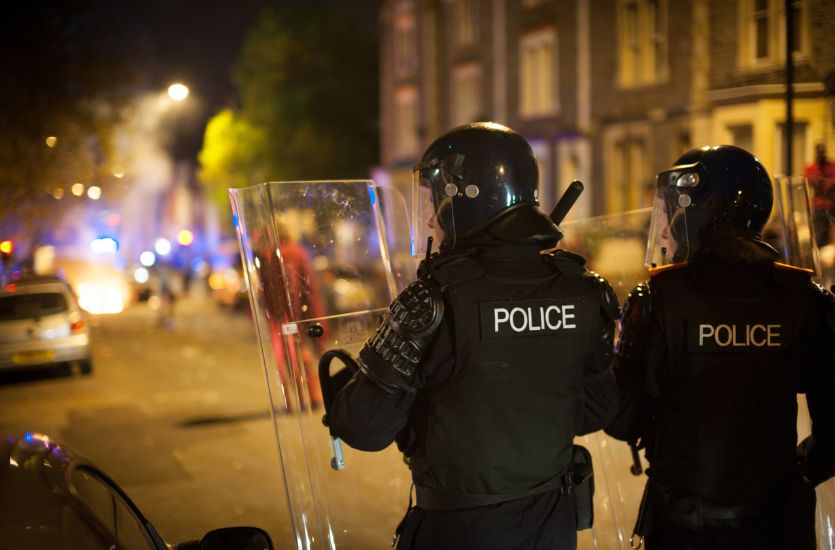
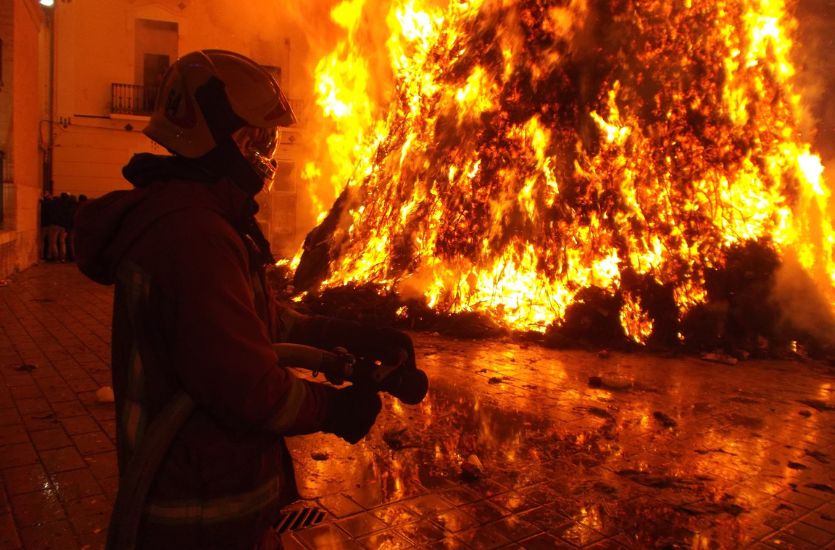
Imagine a major catastrophe that requires responders to arrive from multiple jurisdictions across the state and surrounding areas. We’re talking things like earthquakes, tornadoes, and what we’re most used to here in Florida: the dreaded hurricane. These natural disasters happen. And other disaster-related events occur, too, such as September 11, 2001, which happened 25 years ago. And of course, more recently, situations such as the Boston Marathon Bombing. When horrific events like these happen, responders band together to help us all get through it.
Unfortunately, when responders from multiple agencies are on the scene, communications aren’t always as seamless as we’d like. Not all radio systems operate the same way, and responders arriving from another county or state may not be able to communicate using an agency’s everyday radio system.
This is precisely why mutual aid channels and careful communications planning are so important. By giving responding agencies access to common radio frequencies, teams that don’t normally work together can communicate when the situation demands it most.
What Does Mutual Aid Mean in Emergency Communications?
When you think of mutual aid, you probably think of the official definition. Mutual aid is most often considered the peer-to-peer exchange of services and resources that provide mutual benefit. But in communications, mutual aid goes a bit further.
In emergency response, mutual aid refers to assistance provided across agency or jurisdictional boundaries during an incident. One county may send firefighters to another, for example, or a state may request specialized teams from elsewhere. That assistance can include personnel, vehicles, equipment, technical specialists, and communications resources.
But bringing more radios to the scene doesn’t automatically solve the communications problem. Responders may use different radio bands, systems, frequencies, or programming in their day-to-day work. Simply switching to another agency’s regular channel may not be possible.
This is where mutual aid communications become part of the larger response plan. The term covers the planning, systems, procedures, and resources that allow responding organizations to exchange information during an incident. Interoperability is part of that process. It refers to the ability of personnel from different agencies or jurisdictions to communicate when they need to work together.
Why 9/11 Changed the Conversation About Interoperability
September 11 brought much greater national attention to gaps in public safety communications. At the time, the FDNY and NYPD did not use compatible radios or routinely coordinate command-and-control communications. As we all know now, some information never reached responders inside the towers.
As we discussed in our recent article on how public safety communications changed after 9/11, the problems were about so much more than just radio equipment. Planning, procedures, training, and interagency coordination also mattered.
We keep learning lessons from that national disaster each and every day. During everyday operations, an agency’s radio system may work exactly as intended. A large incident can suddenly bring together departments that have never worked on the same system before.
Nationwide radio resources help address that problem. One reference used by the emergency communications community is the National Interoperability Field Operations Guide, or NIFOG. NIFOG, published by CISA, gives radio technicians technical guidance for managing radio systems and communications during disaster response and recovery.
What are Nationwide Interoperability Channels?
Nationwide interoperability channels give authorized public safety organizations common frequencies that can be programmed into compatible radios. These are standardized resources rather than channels belonging to one local police department, fire department, or other agency.
Plain language and common terminology matter, too. Responders arriving from different areas need to understand channel names and assignments without relying on local codes or jargon. The nationwide naming convention helps by identifying the radio band and the channel’s purpose.
CALL channels are often used for first contact between responders or agencies. Once contact is made, communications can be shifted to a TAC or tactical channel for incident operations. The division helps organize radio traffic and keeps calling frequencies clear for their intended use.
NIFOG provides the technical details agencies need for these channels, including frequencies, tones, operating modes, and programming information.
VCALL and VTAC on VHF
For agencies operating on VHF, VCALL10 provides a nationwide calling frequency that responders can use to establish initial contact when another channel has not been assigned. From there, responders can be directed to a VTAC channel for incident traffic.
The NIFOG identifies these VHF channels
- VCALL10 for calling
- VTAC11 through VTAC14 for tactical operations
Many public safety agencies use VHF radio, and it also plays a role in search and rescue and other emergency operations. During a multi-agency response, personnel might make initial contact on VCALL10 before moving to an assigned VTAC frequency. This keeps the calling channel available while incident communications continue elsewhere.
UCALL and UTAC on UHF
The same general structure applies to the UHF band. UCALL40 serves as the nationwide UHF calling channel, while UTAC channels are available for tactical communications.
The NIFOG identifies
- UCALL40 for calling
- UTAC41 through UTAC43 for tactical operations
There is an important limitation to understand here. A nationwide channel designation does not mean every public safety radio can use it. A radio must be able to operate within the appropriate frequency band and be properly programmed for those frequencies. For example, a VHF-only radio cannot simply switch over to a UHF frequency. Agencies need to consider their equipment and programming when planning how personnel will communicate with outside responders.
8CALL and 8TAC on 800 MHz
For agencies using 800 MHz equipment, the nationwide calling and tactical channels follow a similar naming system.
NIFOG identifies
- 8CALL90 for calling
- 8TAC91 through 8TAC94 for tactical operations
Responders can use 8CALL90 to establish contact and then move incident traffic to an assigned 8TAC channel. These resources can be particularly useful when multiple agencies operating compatible 800 MHz radios need a common place to communicate.
NIFOG provides the technical information needed to program these channels, including transmit and receive frequencies, tones, and operating parameters. Programming this information into compatible radios before deployment gives responders access to assigned resources during a multi-agency incident.
How Are These Channels Programmed Into Public Safety Radios?
Public safety radios don’t automatically contain every nationwide frequency. A radio technician typically programs the appropriate channels into each radio using a codeplug, which is the programming file that controls its frequencies, channel names, zones, tones, and other settings.
During programming, technicians may group nationwide channels into a designated zone or channel bank so personnel can locate them quickly. Consistent naming also matters. A responder looking for VTAC12, for example, should be able to recognize that designation on the radio rather than having to interpret a local nickname.
Technicians can use NIFOG as a reference for frequencies, tones, operating modes, and other programming parameters. Agencies should also train personnel on where these channels are located in their radios and how to access them before a large incident occurs.
Why Are Mutual Aid Channels Conventional Instead of Trunked?
There are two primary radio approaches.
- Conventional radio uses a specific frequency or pair of frequencies selected by the user.
- Trunked radio relies on a managed system that assigns radio traffic across available frequencies using infrastructure, system programming, and talkgroups.
A visiting agency may not have access to the host agency’s trunked system. Its radios might lack the required programming, credentials, compatible technology, or authorization.
Nationwide conventional frequencies give compatible radios a common communications option without adding every visiting responder to the local trunked system. Some can also operate in direct, or simplex, mode, allowing radio-to-radio communication without a repeater.
Conventional channels do not replace trunked systems. Instead, they give agencies another way to communicate when their normal systems cannot connect them.
Who Decides Which Channels Everyone Uses?
With multiple channels and agencies involved, someone needs to coordinate who talks where. During a large incident, that responsibility is part of a much broader communications plan.
Meet the Communications Unit Leader
The Communications Unit Leader, commonly called the COML, works within the Incident Command System to coordinate communications during an incident. The COML evaluates communications needs and available resources, works with communications personnel, assigns radio resources, and helps address interoperability needs.
The incident communications plan documents those assignments. The ICS 205, or Incident Radio Communications Plan, identifies radio channel and frequency assignments for different operations. NIFOG includes an ICS 205 example that combines conventional tactical frequencies and trunked talkgroups.
For example, law enforcement, fire operations, search and rescue, medical teams, and command may each receive different assignments. Responders follow this plan rather than selecting frequencies on their own, helping keep radio traffic organized across the incident.
What Happens When a Major Hurricane Hits Florida?
Floridians know how much damage a major hurricane can leave behind. Flooding, debris, power outages, damaged infrastructure, medical emergencies, search-and-rescue operations, utility restoration, and law enforcement needs can quickly stretch local resources.
When additional help is needed, responders may arrive from other Florida communities or through the Emergency Management Assistance Compact, which allows states to share personnel and resources during disasters.
Those visiting teams bring their skills and equipment, but they may also bring radios designed for the systems they use back home. That creates a communications challenge at a time when dozens of agencies may need to work together.
Hurricane Irma in 2017
Hurricane Irma was one of Florida’s most destructive storms in recent history. It made landfall at Cudjoe Key as a Category 4 hurricane with winds near 130 mph. More than 90% of Florida utilities were affected. The Florida Keys Aqueduct Authority eventually received crews from Tennessee, South Carolina, and North Carolina through interstate assistance.
Irma illustrates how quickly a disaster can bring outside personnel into affected communities. When responders and support crews arrive from other jurisdictions, communications planning helps agencies coordinate despite differences in their normal radio systems.
Hurricane Michael in 2018
Just one year later, Hurricane Michael struck the Florida Panhandle as a Category 5 hurricane with estimated sustained winds of 160 mph. It remains the strongest hurricane landfall on record in the Florida Panhandle.
A disaster of this magnitude can damage infrastructure while bringing responders and specialized resources from many jurisdictions into the same area. Preplanned interoperability gives communications teams more options when normal systems are damaged, unavailable, or unfamiliar to visiting personnel. Conventional radio resources can provide another way to coordinate teams across the affected region.
What Could Mutual Aid Communications Look Like During a Hurricane?
Picture a Florida county responding to widespread hurricane damage. Its local radio system continues handling normal public safety operations, but outside teams begin arriving to help.
The communications plan might look something like this.
- Local fire and law enforcement remain on assigned trunked talkgroups.
- A search and rescue team from another Florida county receives a designated channel assignment.
- Responders arriving from another state receive conventional channel assignments their compatible radios can access.
- Command and communications personnel coordinate those assignments through the incident communications plan.
Interoperability channels give communications planners another tool for connecting responders who don’t normally work on the same radio system. Instead of each team deciding independently where to communicate, personnel receive clear assignments based on their role, equipment, and the incident’s needs. This can mean less confusion when many agencies are working across a large disaster area.
Radio Programming Should Happen Before the Storm
The middle of a hurricane response is not the time to discover that a radio lacks a needed frequency or that personnel don’t know where to locate an assigned channel. Radio preparation must happen well before crews deploy.
Before an incident, agencies should review several areas.
- Know which nationwide and regional resources each radio supports.
- Program channels using accepted names and technical parameters.
- Organize channels so personnel can locate them quickly.
- Train responders on how to access and use assigned channels.
- Review radio programming and communications plans as guidance or operational needs change.
Training exercises can also reveal problems that might otherwise go unnoticed. A channel may be programmed correctly but difficult for personnel to locate, for example.
This preparation is also where an experienced radio communications provider can help agencies review programming and address gaps before severe weather puts their equipment to the test.
EMCI Wireless Helps Agencies Prepare Before the Call Comes
Interoperability starts long before responders arrive at an incident. EMCI Wireless helps public safety agencies prepare by reviewing compatible radio fleets and programming the appropriate nationwide and regional channels where needed.
During normal operations, technicians have time to address radio configuration, channel organization, and programming before severe weather or another emergency puts those radios to work. Planning ahead for mutual aid communications can give responders one less communications problem to solve when multiple agencies arrive to help.
Talk to our team at EMCI Wireless about preparing your radio fleet before the next call comes. Schedule your free consultation today.