
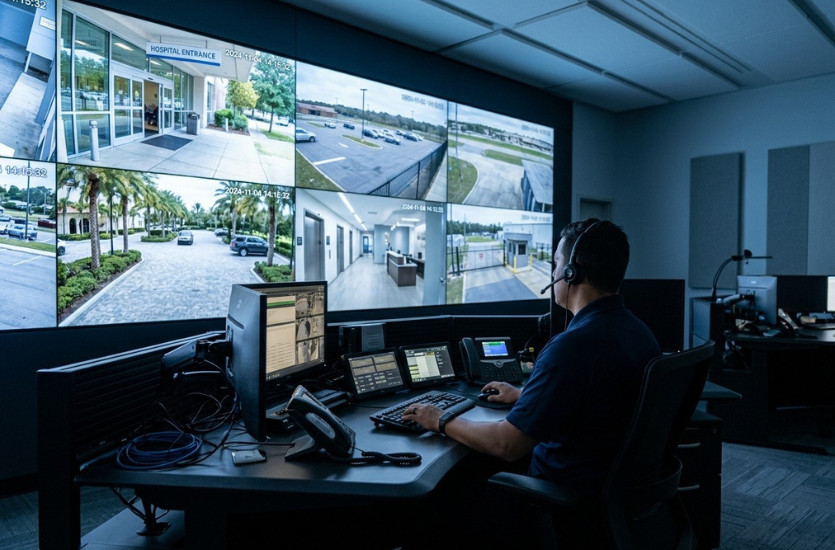
It might seem odd to revisit something a past president said over 50 years ago, but you have to admit that sometimes things stick. In this instance, we’re talking about President Eisenhower’s speech at the National Defense Executive Reserve Conference back in 1957. During his talk, he said, “Plans are worthless, but planning is everything.” And when you really think about it, he’s absolutely right.
That same thinking applies to public safety today. When an emergency happens at a hospital, school, resort, or manufacturing plant, being prepared can make a big difference in how quickly security teams and law enforcement respond. And part of that preparation involves knowing how to share information before it’s needed.
From sharing security cameras with police to connecting emergency alerts and radio communications, private organizations can work with responding agencies in several ways. Let’s take a closer look at how these partnerships work, the technology that makes them possible, and what organizations should consider before getting started.
Four Ways Private Organizations Can Share Information With Law Enforcement
Have you ever wondered just how video data gets shared with law enforcement so quickly? Well, it doesn’t happen by accident. It takes planning, coordination, and the right technology. Long before an emergency occurs, private organizations and local law enforcement agencies need to establish the following:
- How information will be shared
- Who will have access to it
- When that access will be allowed
Fortunately, there are lots of ways to make it happen. It just depends on an organization’s needs and the systems already in place. Below, our team at EMCI Wireless in Florida has outlined four approaches that you might want to consider for your business.
1. Participate in a Camera Registry Program
One way private organizations can work with law enforcement is by participating in a camera registry program. Many police departments offer these programs through their crime centers or community safety initiatives. And the idea is pretty simple. Businesses voluntarily register the locations of their security cameras so police know where to look when investigating an incident.
For example, consider a resort that registers cameras covering its entrances, parking lots, and main driveways. If an incident happens nearby, investigators can contact the resort to request footage that might help them understand what happened.
That said, registering a camera doesn’t automatically give police access to its live feed. Sharing security cameras with police is typically a separate arrangement, and participation rules can vary by department.
Motorola Solutions offers tools such as CommandCentral Community for community engagement and CommandCentral Aware for mapping registered cameras and coordinating approved video access.
If your organization is interested in participating, we encourage you to contact your local police department. We’re confident they will gladly share available programs and guide you on how to build this into your emergency preparedness planning process.
2. Share Live Camera Feeds During an Emergency
So, what about if an actual emergency is happening, like right now? Responding officers will appreciate being able to see what’s going on before they arrive.
If you can actively share a feed, it can provide critical information that can make a life-saving difference. With the right systems and permissions in place, private organizations can give authorized dispatchers or crime-center personnel proactive law enforcement access to selected security cameras during an incident.
For example, let’s envision a school reporting an unauthorized person entering a building. Rather than relying solely on phone calls, dispatch personnel could view approved exterior camera feeds and share information about the person’s location or movements with responding officers.
And remember, an organization doesn’t necessarily have to share every camera it operates. It may choose to provide access only to cameras covering entrances, parking areas, or other agreed-upon locations.
Motorola Solutions’ Avigilon video security systems can work with CommandCentral Aware to bring approved camera feeds into a shared view for public safety personnel. Of course, the specific connections, permissions, and technical requirements need to be worked out beforehand.
3. Send Panic Alerts Directly to Emergency Responders
Sometimes, making a phone call to explain what’s happening isn’t easy. Depending on the situation, an employee might not be able to safely speak or spend several minutes describing where help is needed.
This is why you want a panic alert system. These tools let authorized employees activate an emergency alert that notifies 911 personnel and designated contacts within the organization.
For example, consider a hospital employee dealing with a threatening person in a particular wing. By activating a panic alert, the employee can call for help while sending location and incident information to connected emergency personnel.
Motorola Solutions’ Rave Panic Button is one example. The mobile app allows users to quickly dial 911 while sending alerts to designated personnel. Depending on the system setup, dispatchers can also receive information about the facility, location, and type of emergency. Communication can continue through the 911 call, with additional status updates available through supported features.
Before implementing a system like this, organizations should work with their local 911 center to confirm compatibility and establish procedures. Regular testing is also important so everyone knows what to expect when an alert is activated.
4. Connect Private Security Radios With Responding Agencies
Video footage can tell responders a lot about what’s happening. However, sometimes they need to speak directly with people already on scene.
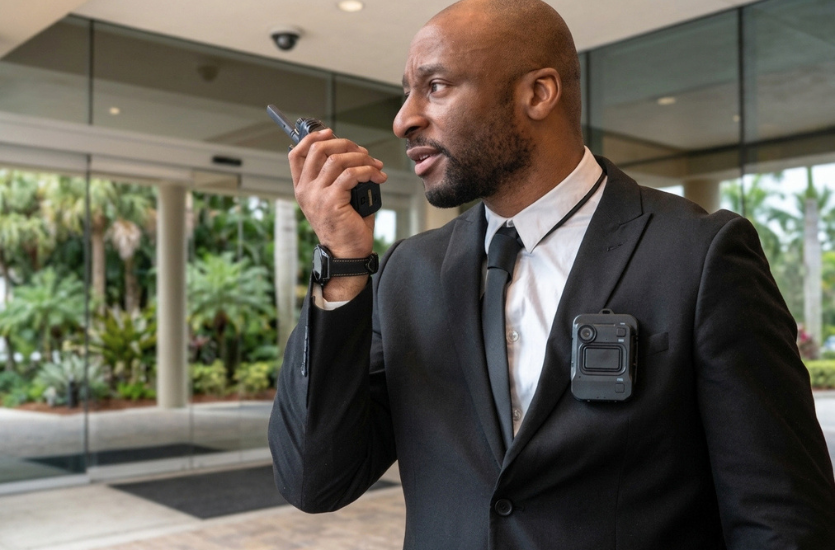
The problem? Private security teams and local police departments don’t always use the same radio systems. Without a plan, communicating between the two can be difficult.
Fortunately, several ways can connect these teams, including shared radio talkgroups, temporary communication channels, and push-to-talk-over-cellular technology. Depending on the equipment and agreements involved, these arrangements can let approved personnel exchange information without switching between multiple devices or relaying every message through another person.
Consider an industrial plant experiencing a chemical release. Plant security personnel could use an approved communication connection to tell responding police and fire crews which entrances are accessible and which areas to avoid.
Motorola Solutions’ WAVE PTX provides broadband push-to-talk communications through smartphones and compatible devices. With supported gateways, it can also connect certain existing radio systems.
Of course, these connections require planning with participating agencies. Organizations need to establish who can use shared channels, what information can be transmitted, and when to activate those channels.
How to Protect Privacy When Sharing Security Cameras with Police
Now, let’s talk just a bit about the elephant in the room. Of course, we’re talking about privacy. For many businesses, including financial institutions, healthcare facilities, places of worship, and educational institutions, those organizations have a responsibility to protect the privacy of employees, patients, students, customers, and visitors.
So, how can you share information with law enforcement while still respecting those privacy concerns? It all comes down to establishing clear rules and expectations before allowing access to your security cameras.
Here are some questions to consider when developing your video-sharing policies.
- Who can view the footage? Decide which employees, dispatchers, and law enforcement personnel can access your cameras.
- Which cameras can they access? Identify which cameras can be shared and which should remain private, especially in sensitive areas.
- When can footage be viewed? Decide whether access will be available during emergencies only or under other agreed-upon circumstances.
- How long can footage be stored? Establish guidelines for retaining, sharing, and deleting recordings, including footage that may be needed as evidence.
- How will access be monitored? Keep records of who accesses your camera feeds and review those records periodically.
- What legal requirements apply? Consider applicable privacy laws and regulations, including HIPAA for healthcare facilities and FERPA for educational institutions when relevant.
Remember, participating in a camera-sharing program doesn’t mean you have to give law enforcement unlimited access to your security systems. With the right agreements and technology in place, your organization can decide what information to share and under what circumstances, subject to applicable laws and legal obligations.
How to Set Up a Public Safety Information-Sharing Plan
If your organization wants to be part of the solution and help law enforcement do their jobs better, you probably have one simple question: How do I sign up?
Well, it’s not quite as simple as filling out a form and calling it a day. But getting started doesn’t have to be overly complicated, either. The biggest thing is making sure your organization and local law enforcement agree on what information will be shared and how.
Here are five steps to get started.
- Contact your local law enforcement agency. Ask whether they have a camera registry program or participate in a crime center that accepts video feeds from private organizations.
- Review your existing security systems. Review your cameras, access control systems, emergency alerts, and radios to determine what you already have. This is also a good time to think about your overall layered security strategy.
- Establish your information-sharing policies. Work with law enforcement, your IT team, and legal counsel to determine who can access information, when it can be shared, and how you will protect privacy.
- Connect the necessary technology. Depending on your existing equipment, you may need additional software, system integrations, or communication tools to share information with responding agencies.
- Put your plan to the test. Conduct practice drills with your security team and participating agencies. Test camera access, emergency alerts, and radio communications so everyone understands their responsibilities.
And remember President Eisenhower’s message from earlier? This is exactly where that planning comes into play. Everyone needs to know their role and what they’re responsible for doing long before an emergency puts them to the test.
How EMCI Wireless Helps Organizations Connect Security and Public Safety Systems
The upside to all of this is that your organization may already have some of the technology in place to share information with law enforcement. You may have security cameras, two-way radios, or an emergency alert system. The question is, can those systems play nice together and talk to the agencies that need information in an emergency?
That’s where our team at EMCI Wireless can assist. As a Motorola Solutions Channel Partner in Central and South Florida, we help organizations evaluate their existing equipment and identify technology that addresses their security and communication requirements.
Some of the solutions we offer include:
- Avigilon video security provides surveillance, video management, and access control capabilities that can support approved video sharing.
- Rave emergency communication solutions help organizations send panic alerts, share emergency information, and notify designated personnel.
- WAVE PTX connects security teams through broadband push-to-talk communications, with options for connecting compatible radio systems.
Whether you’re starting from scratch or looking to connect existing equipment, we can help you choose the systems and integrations that make sense for your organization.
Prepare to Share Information Before an Emergency Happens
You’ve likely heard the phrase “the best-laid plans,” which really means that no matter how much effort we put into a plan, things can still go wrong. But that doesn’t mean we shouldn’t do our best. Sharing video access with public safety teams is a big step in the right direction toward making Florida a better place to work and live.
At the end of the day, a public-private partnership for public safety comes down to three things:
- Working together
- Sharing information
- Preparing for emergencies before they happen
From security camera access to emergency alerts and radio communications, the right systems can make a huge difference when it matters most.
Ready to get started? Contact our team at EMCI Wireless today to discuss your organization’s security and communication needs and how we can help you prepare.